
New Construction Homes California: What to Know Before You Build or Buy
Why New Construction Homes in California Need a Different Planning Approach
Interest in new construction homes California continues to grow as buyers and property owners look for modern layouts, energy efficiency, and long-term value. But building or buying new in California isn’t the same as in other states. From strict building regulations to evolving energy standards and design expectations, the process requires more thoughtful planning from the start.
This guide breaks down what to expect whether you’re exploring new home communities, planning a custom build, or comparing new construction houses for sale. You’ll learn how to navigate decisions, avoid common missteps, and move forward with clarity. Alvapareen Construction — Built for Transformation.
Why state-specific guidance matters
California projects involve layered approvals, zoning considerations, and some of the most advanced energy efficiency requirements in the country. Design choices, permitting timelines, and builder selection all require careful coordination, making early planning essential for a smoother experience.
Who this guide is for
This resource is designed for homeowners, property owners, and investors evaluating whether to build a new home, personalize a development property, or purchase a move-in-ready option. If you’re weighing your next step in California’s new construction market, this guide will help you make informed decisions.
What Counts as New Construction Homes in California
Definition and scope
New construction homes in California are residential properties that are newly built and have never been occupied, typically purchased directly from a builder or developed from the ground up on a vacant or redeveloped lot. This includes projects handled by a new construction home builder as well as fully custom builds commissioned by property owners.
Unlike resale homes, which have prior owners, or remodeling projects that update existing structures, new build homes California start fresh—often requiring planning, design approvals, and construction from foundation to finish. The exact scope can vary based on lot conditions, local jurisdiction requirements, and intended use.
Common new build project types
- Custom homes: Fully personalized homes designed and built for a specific owner.
- Planned developments: Homes built within California new home communities with pre-designed layouts.
- Townhomes and condos: Multi-unit new construction houses for sale with shared structures.
- Multi-family apartments: Ground-up residential developments for rental or investment.
- Quick move-in homes: Completed or near-complete homes available for faster occupancy.
Where personalization fits
Personalization depends on the type of project. Custom builds offer full control over layout, materials, and finishes, while production homes may allow selections through a design studio—such as cabinetry, flooring, and fixtures. When buying a new construction home, choices often range from structural upgrades to finish packages, with flexibility shaped by the builder, project phase, and local building requirements.
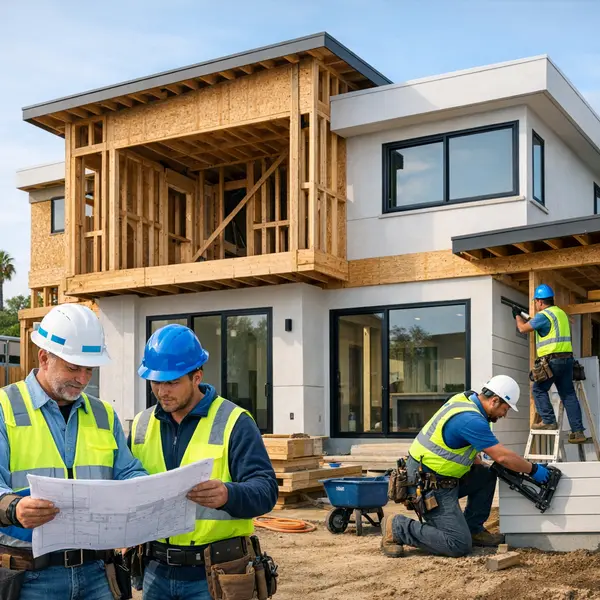
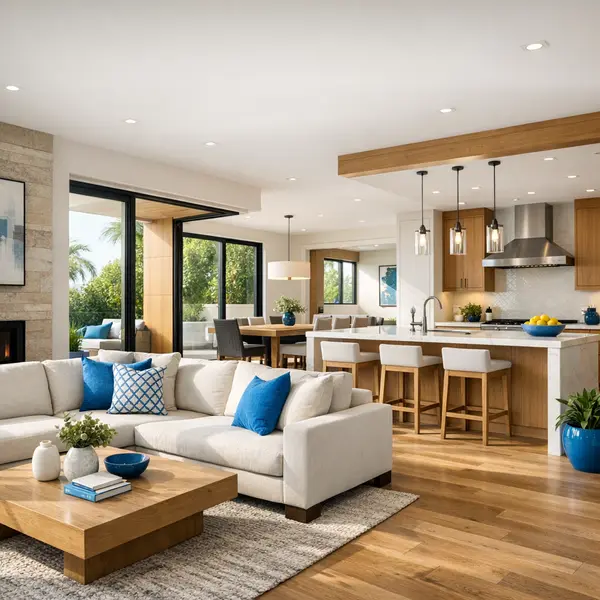
Why Many Buyers and Owners Choose New Construction Homes in California
Interest in new construction homes California continues to grow as buyers look for homes that better reflect how people live today. Compared to older properties, modern new construction homes often offer more flexibility, updated systems, and a design approach that aligns with current lifestyle needs. While every project is different, several consistent benefits help explain why new builds appeal to both homeowners and investors.
Modern layouts and personalization
Many new build homes California are designed with open floor plans, functional kitchens, and indoor-outdoor flow that older homes may lack. Buyers can often personalize finishes, layouts, and features through options similar to a design studio experience. This level of control allows the home to reflect daily routines, whether that means flexible workspaces, multi-generational living, or entertainment-focused layouts.
Energy efficiency and building standards
Energy efficient new homes are typically built to meet current California building codes, which emphasize insulation, ventilation, and system performance. While exact savings vary, newer construction may support more consistent indoor comfort and long-term operational planning compared to outdated systems found in older housing stock.
Design continuity and long-term planning value
A key advantage of new construction homes is design cohesion. Materials, finishes, and layouts are selected together, creating a balanced and harmonious environment from day one. This can reduce the need for immediate updates after move-in and support long-term planning around how the space will be used.
For those exploring a fully tailored approach, working with a custom new construction builder can help align design, budgeting, and site-specific requirements. And if a full build isn’t necessary, options like Accessory Dwelling Units (ADUs) can provide added flexibility without developing an entirely new primary residence.
How the New Construction Process Typically Works in California
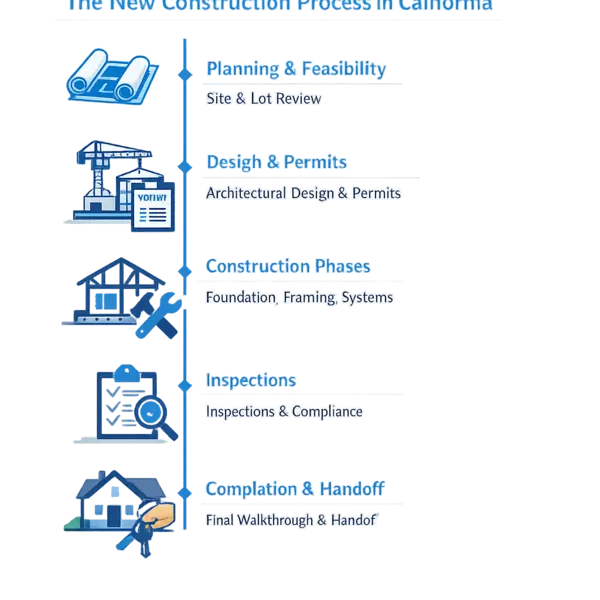
The new construction process in California follows a structured sequence, but timelines and details can vary depending on the property, jurisdiction, and design complexity. Whether you plan to build a new home or purchase one, understanding each phase helps you make informed decisions and avoid delays.
Planning and feasibility
Every successful new construction homes California project starts with early planning. This includes site evaluation, defining project goals, aligning a realistic budget, and exploring design direction. Factors like lot conditions, zoning, and utility access are reviewed before moving into formal plans. This stage often determines what’s feasible and how the project will move forward.
Design, permits, and approvals
Once feasibility is confirmed, architectural plans are developed and refined. These plans are submitted for local jurisdiction review to ensure compliance with California building codes and regulations. Depending on the location, additional approvals—such as HOA reviews or planning board clearances—may apply. This phase requires careful coordination and documentation, which is why many property owners rely on experienced teams offering new construction services for custom homes and developments to manage the process efficiently.
Construction, inspections, and closeout
After permits are issued, construction begins in phases—site preparation, foundation, framing, systems installation, and interior finishes. Throughout the build, required inspections ensure compliance with safety and code standards. As the project nears completion, a final walkthrough identifies any remaining items (often called a punch list) before handoff. Clear communication and timely decisions during this stage are essential to keeping progress on track.
While every new build homes California project differs, this step-by-step structure provides a reliable framework for understanding how modern homes move from concept to completion.
New Construction vs Resale Homes and Other Build Options
When exploring new construction homes California, it helps to compare your options side by side. Whether you’re deciding between resale properties, fully custom builds, or homes in California new home communities, the right path depends on your timeline, budget, and how much control you want over design and features.
New construction versus resale
Custom builds versus community-based options
Not all new build homes California follow the same path. Your level of personalization and speed to move-in can vary significantly:
Fully Custom Homes
Best for maximum flexibility. You select the lot, design, and materials from the ground up. This approach involves more planning but offers full control. Learn more about new construction services for custom homes and developments.
Community-Based New Homes
Common in new home communities, these offer pre-designed floor plans with limited personalization through a design studio. Faster than fully custom builds, but with less flexibility.
Quick Move-In Homes
These new construction houses for sale are already built or near completion. Ideal if you want the benefits of a new home without waiting for the full construction process.
For some property owners, building a full home isn’t the only option. Adding a smaller living unit like an ADU design and construction project can provide flexibility without a full rebuild. Ultimately, the right choice depends on your goals, property potential, and how much customization you need.
What Affects the Cost of New Construction Homes in California
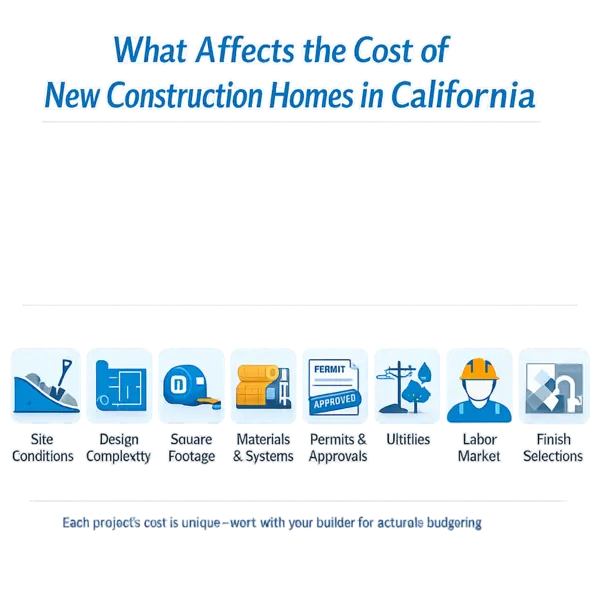
The cost of new construction homes California varies widely based on project scope, site conditions, and design decisions. Rather than relying on generic price ranges, it’s more accurate to understand the key cost drivers that shape your total investment when you build a new home or evaluate new construction houses for sale.
Major cost drivers
- Land and site conditions: Grading, soil quality, slope, and access can significantly affect preparation work.
- Design complexity: Custom layouts, multi-story builds, and architectural details increase engineering and construction effort.
- Square footage: Larger homes require more materials, labor, and structural support.
- Materials and systems: Choices like framing, insulation, windows, and energy-efficient systems influence both cost and performance.
- Permits and approvals: Local requirements, plan checks, and inspections vary across California jurisdictions.
- Utilities and infrastructure: Connecting water, sewer, electrical, and gas may require additional work depending on the property.
- Labor and market conditions: Availability of skilled trades and regional demand can impact scheduling and cost.
Structural options versus finish selections
Structural elements—such as foundation type, framing, layout changes, and seismic requirements—tend to have a larger impact on your budget than cosmetic upgrades. Finish selections like cabinetry, flooring, fixtures, and design studio upgrades offer flexibility, but they build on top of the core construction scope rather than defining it.
Why project-specific budgeting matters
Every new construction process is different. Accurate budgeting depends on completed plans, engineering, site evaluation, and local approval pathways—not statewide averages. Reviewing the full scope of New Construction Services for Custom Homes & Developments can help clarify what’s included before estimating costs.
For reliable numbers, a professional builder will evaluate your property, design goals, and build requirements to create a realistic cost framework tailored to your project.
California-Specific Factors to Consider Before Starting
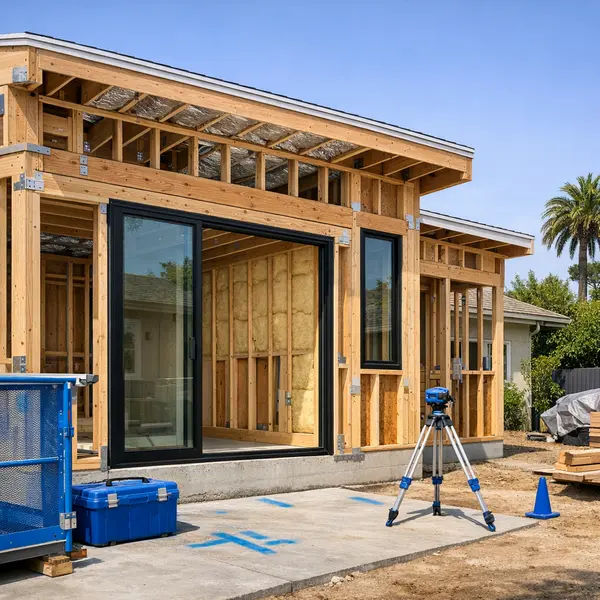
Planning new construction homes California involves more than design and budget—it requires a clear understanding of state-specific regulations, environmental expectations, and regional building practices. From approvals to energy standards, early awareness can help reduce delays and align your project with California’s evolving construction landscape.
Permits and jurisdiction variation
Approval pathways for new build homes California can vary widely depending on the jurisdiction, property zoning, and project scope. Some areas require multiple layers of review, including planning departments, building divisions, and in certain cases, architectural or neighborhood design boards.
Inspections are typically conducted at multiple stages of the new construction process, and requirements may differ between municipalities. Factors such as lot conditions, hillside regulations, or coastal considerations can further influence timelines and documentation. Because of this variability, working with a knowledgeable home builder California owners trust is essential for navigating approvals efficiently.
Energy and climate planning
California places a strong emphasis on sustainability, which directly impacts how modern new construction homes are designed and built. Energy codes encourage high-performance insulation, efficient HVAC systems, and advanced window technologies to support energy efficient new homes.
Climate-responsive design also matters. Coastal, desert, and inland regions each present different environmental demands, influencing material choices, durability planning, and long-term maintenance. In some communities, HOA or neighborhood guidelines may also shape exterior design and layout decisions.
Coordinating these factors early—before finalizing plans—helps minimize revisions and ensures your project is aligned with both regulatory expectations and long-term performance goals.
How to Plan for a New Construction Home Project in California
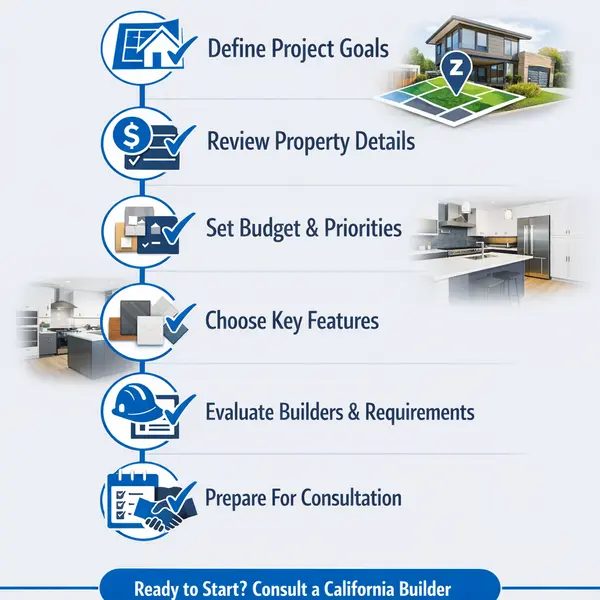
Planning new construction homes California requires more than inspiration—it takes structured decisions, clear documentation, and realistic expectations. Use the steps below to organize your ideas before meeting with a builder.
Step 1: Define your project goals
Clarify whether you’re building a custom residence, investment property, or exploring new home communities. Decide on size, layout, and long-term use. Some homeowners also evaluate alternatives like an ADU project if a full new build isn’t necessary.
Step 2: Review the property and likely constraints
Gather key details about your lot or intended purchase—access, slope, utilities, and zoning context. California projects often involve site-specific considerations, so early awareness helps avoid delays later.
Step 3: Set a realistic budget and priority list
Establish a working budget range and separate must-haves from optional upgrades. Costs for new construction homes vary widely based on design, materials, and site conditions, so flexibility is important.
Step 4: Prepare for a builder consultation
Bring your goals, property details, timeline expectations, and questions about the new construction process. This is where professional input helps refine scope and feasibility. You can also review New Construction Services for Custom Homes & Developments before your meeting.
Frequently Asked Questions About New Construction Homes in California
Timelines, permits, and approvals
What is considered a new construction home in California?
A new construction home in California is a residential property that has never been lived in and is recently built or under construction. This includes fully custom homes, semi-custom builds, and homes within California new home communities offered by builders.
Is buying a new construction home different from building a custom home?
Yes. Buying in a development or new home community typically involves selecting from pre-designed floor plans with limited customization. Building a custom home offers greater control over layout, materials, and design but usually requires more planning, coordination, and decision-making.
How long does a new construction home project usually take in California?
Timelines vary based on project scope, location, and permitting requirements. A new construction process can take several months to over a year, especially for custom homes. Factors like site conditions, design changes, and inspections can affect the overall schedule.
What permits and inspections are typically required for a new construction home?
New build homes in California require building permits, zoning approvals, and multiple inspections throughout construction. These may include foundation, framing, electrical, plumbing, and final inspections. Requirements vary by city and must be confirmed before construction begins.
Costs, customization, and selections
What factors affect the cost of new construction homes in California?
Costs can vary based on land value, design complexity, materials, labor, and local regulations. Upgrades, energy-efficient features, and site preparation also play a significant role. Market conditions and location within California can further influence total project cost.
Can I personalize the floor plan and finishes in a new construction home?
Most new construction homes allow some level of personalization. Buyers in planned communities may select finishes through a design studio, while custom builds offer full control over layout and materials. The extent of customization depends on the builder and project stage.
Are new construction homes in California more energy efficient than older homes?
Generally, yes. Modern new construction homes are built to meet updated California energy codes, which often include improved insulation, efficient HVAC systems, and better window performance. Many energy efficient new homes also incorporate solar readiness or smart home features.
Builder selection and post-completion questions
Do new construction homes come with a warranty?
Most new construction houses for sale include a builder warranty that covers certain structural elements and workmanship for a defined period. Coverage details vary, so it’s important to review warranty terms carefully before purchasing or signing a contract.
How do I choose the right new construction home builder in California?
Look for a licensed home builder in California with a strong portfolio, transparent communication, and experience in your project type. Reviewing past projects, timelines, and client feedback can help you evaluate reliability and overall fit.
What is the difference between a quick move-in home and a fully personalized build?
A quick move-in new construction home is already built or near completion, offering faster occupancy with limited customization. A fully personalized build allows you to design from the ground up but typically requires more time and involvement throughout the construction process.
Discuss Your New Construction Plans with Alvapareen Construction
Planning new construction homes in California involves many moving parts—from site conditions and design goals to permitting and budgeting. At Alvapareen Construction, we take a structured, quality-focused approach to help you evaluate your options and align your vision with a realistic project plan. Every build is different, and timelines, approvals, and costs can vary based on your property and scope.
Start by reviewing our New Construction Services for Custom Homes & Developments to understand how we approach new build homes in California, then connect with our team to discuss your specific goals.
When it makes sense to reach out
If you have a property, a concept for a custom home, or questions about feasibility, budget direction, or the new construction process, it’s the right time to start a conversation. Early guidance can help you avoid costly missteps and better define your project scope.
What to have ready for the conversation
Bring any available property details, your goals, preferred timeline, and ideas about layout or style. Questions about approvals, design direction, and overall investment are also helpful—these details allow a more productive and accurate discussion.
Final Thoughts on Choosing the Right New Construction Path in California
Navigating new construction homes California comes down to clear planning, realistic budgeting, and choosing a builder that aligns with your goals. From understanding the new construction process and key cost drivers to evaluating personalization options and timelines, each decision shapes the final outcome. The right path—whether building from the ground up or purchasing in new home communities—depends on your property conditions, design priorities, and long-term plans.
Key takeaway recap
Focus on fit: your scope, budget flexibility, and desired level of customization should guide builder selection and project approach. California-specific factors—like permitting, site conditions, and energy requirements—also play a major role and should be reviewed early.
To explore options in more detail, review our New Construction Services for Custom Homes & Developments or connect with the team to discuss your plans.