
Accessory Dwelling Units ADU California: Rules, Costs, Process, and Planning Guide
What to Know Before Starting an ADU in California
Accessory dwelling units ADU California projects involve creating a secondary housing unit on a property that already has a primary home. These units—often called backyard homes, in-law suites, or garage conversions—are increasingly used for rental income, multigenerational living, guest space, or flexible work areas. California has made ADUs more accessible through statewide laws, but local zoning, site conditions, and permitting still play an important role in how each project moves forward.
Whether you are exploring a detached ADU, planning a garage conversion, or evaluating long-term property use, understanding the rules, costs, and construction process early can help you avoid delays and costly revisions. This guide is designed to give you a clear, practical foundation—Built for Transformation—so you can make informed decisions before building.
What this guide covers
You’ll find a structured overview of the key factors behind accessory dwelling units in California, including types of ADUs, current California ADU laws, size and setback considerations, and how local interpretation can vary. We also break down major cost drivers, the ADU construction process, permitting steps, and common mistakes to avoid before starting.
Why ADU interest keeps growing
Demand for ADU California projects continues to rise as property owners look for flexible ways to use their space. ADUs can support changing family needs, create potential rental opportunities, and improve how a property functions over time. While outcomes vary by location and project design, many homeowners see ADUs as a practical way to adapt existing properties without purchasing new land.
What Is an Accessory Dwelling Unit in California?
An accessory dwelling unit (ADU) in California is a secondary, self-contained residential unit located on the same lot as a primary home. In Accessory dwelling units adu california projects, the unit must include its own kitchen, bathroom, and sleeping area, making it fully independent from the main residence.
California has expanded ADU laws to make it easier for homeowners to add housing, increase property value, or support multi-generational living. Whether you’re planning to build an ADU in California with a professional design-build team or exploring your options, understanding the basics is the first step.
ADU definition
An ADU is a legally permitted residential unit that shares a lot with an existing home but functions as a separate living space with its own entrance and utilities (in most cases).
Common ADU types
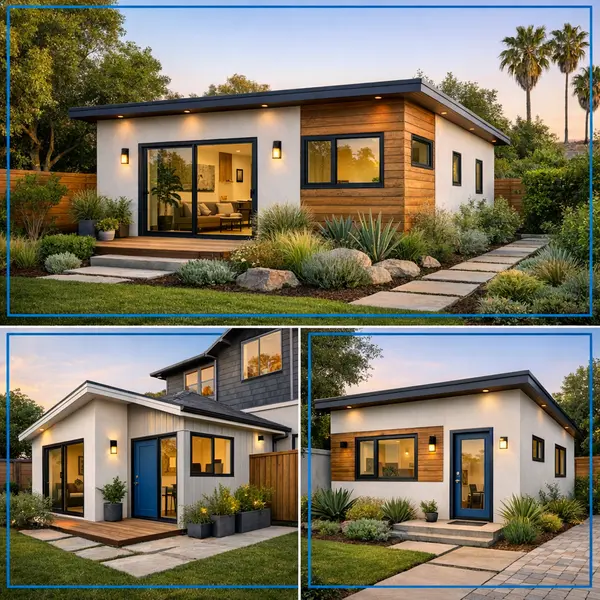
- Detached ADU: A standalone structure, often built in the backyard.
- Attached ADU: An addition connected to the main home.
- Garage conversion ADU: Converts an existing garage into living space.
- Interior ADU: Created within the existing home footprint, such as a basement or partitioned unit.
State rules vs local review
Statewide California ADU laws set baseline standards, including reduced setbacks, flexible parking rules, and allowances like the 800-square-foot exemption that may bypass certain local limits. Height limits and zoning allowances also vary by property type.
However, ADU regulations California still involve local city or county review. Design compatibility, utility connections, site constraints, and permitting requirements can differ, so each project should be evaluated based on its specific property conditions.
Why Homeowners and Property Owners Build ADUs
Accessory dwelling units ADU California projects are driven by a mix of practical needs and long-term property strategy. Whether you’re planning for income, family use, or better land utilization, ADUs offer flexibility that traditional construction options may not.
Rental and lifestyle flexibility
Many property owners explore ADUs as a way to create potential rental income or flexible living space. Depending on local regulations, units may be used for long-term tenants, visiting guests, or private home offices. Options like a garage conversion ADU can turn underused space into functional housing without expanding the main footprint.
Family, accessibility, and aging-in-place goals
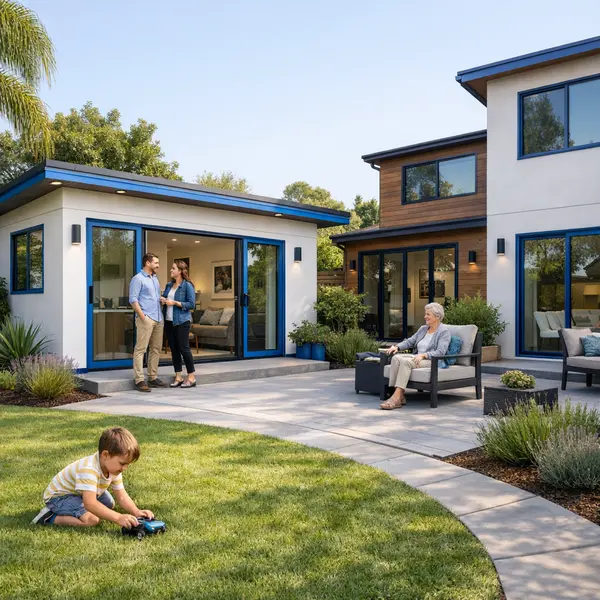
ADUs are often used for multigenerational living—providing independent space for aging parents, adult children, or caregivers. This setup can support privacy while keeping families close, and may be designed with accessibility features that evolve with changing needs.
Property value and site efficiency
Adding a legal secondary unit can improve how a property functions and may increase its appeal to future buyers, although outcomes vary by market and design. Compared to building a new home, ADUs often make more efficient use of existing land and infrastructure. Some owners also weigh options like a home addition versus a detached ADU based on layout and zoning constraints.
If you’re considering how these benefits apply to your property, explore the full Accessory Dwelling Units (ADU) Design & Construction approach to understand what’s realistically achievable under California ADU laws.
How the ADU Planning, Permit, and Construction Process Works
Building Accessory dwelling units ADU California projects involves a structured sequence of planning, approvals, and construction phases. While timelines and requirements vary by city, site conditions, and design complexity, the overall process follows a predictable path. Understanding each step helps you avoid delays and coordinate decisions more efficiently.
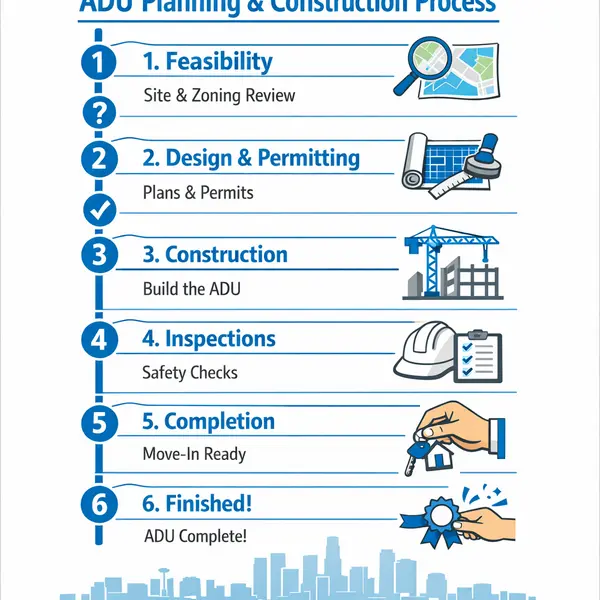
Step 1: Feasibility and site review
The process begins with evaluating your property’s potential. This includes zoning and adu regulations california, lot size, access, setbacks, and utility connections. Early review of adu size limits california, parking considerations, and site constraints helps determine whether a detached ADU, attached unit, or garage conversion ADU California is the best fit.
For a deeper breakdown of zoning and permit requirements, see this guide on ADU permits and zoning in California.
Step 2: Design and permitting
Once feasibility is confirmed, the design phase begins with concept plans, layout optimization, and code coordination. Detailed architectural drawings are prepared and submitted for adu permitting california. Cities may request revisions before approval, and review timelines vary depending on jurisdiction workload and project scope.
Working with a coordinated design-build team like Accessory Dwelling Units (ADU) Design & Construction can help streamline documentation and reduce avoidable back-and-forth.
Step 3: Construction and inspections
After permits are issued, construction begins with site preparation, foundation work (or conversion prep), framing, and installation of mechanical, electrical, and plumbing systems. Interior finishes follow, along with required inspections at key milestones.
Final approvals depend on passing inspections and completing all scope items. Keep in mind that adu project timeline california can vary based on site conditions, utility coordination, and design complexity. For example, garage conversion projects may follow a slightly different sequence than new detached builds.
What Affects ADU Cost in California?
The cost of Accessory dwelling units ADU California projects can vary widely depending on design choices, site conditions, and local requirements. Rather than relying on oversimplified estimates, it’s more useful to understand the core cost drivers that shape your overall budget and planning strategy.
Major cost categories
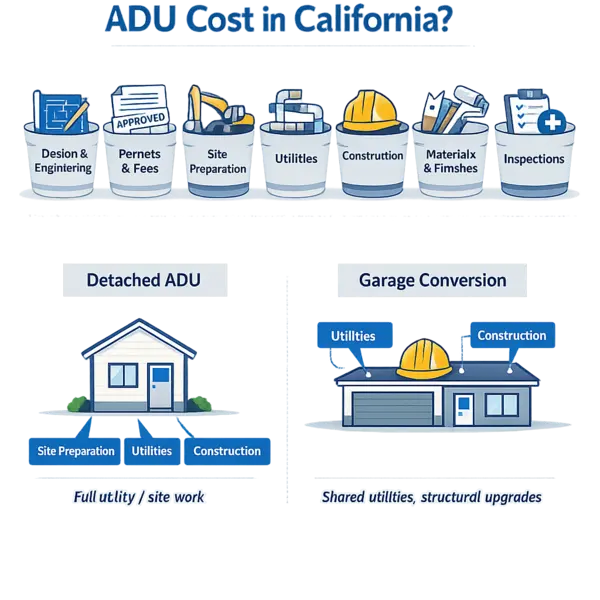
- Design & engineering: architectural plans, structural calculations, and energy compliance
- Permits & local fees: city review, plan check, and applicable impact fees under adu regulations california
- Site preparation: grading, demolition, and access constraints
- Utilities: water, sewer, gas, and electrical connections or upgrades
- Construction scope: foundation, framing, roofing, and structural complexity
- Materials & finishes: cabinetry, flooring, fixtures, and exterior finishes
- Inspections & compliance: required approvals throughout the build process
Why project type changes the budget
Different ADU types follow different cost patterns. A detached ADU California build often involves full utility installation and new structural work, while attached units may share systems with the main home. A garage conversion ADU can reduce structural scope but may still require upgrades for insulation, plumbing, and code compliance. Each path affects labor, materials, and permitting complexity differently.
Smart budgeting and financing considerations
A well-planned ADU budget should include contingency funds for unforeseen site conditions and evolving design needs. Costs may also shift based on timeline, material availability, and inspection requirements. Long-term considerations—like maintenance, insurance, and potential adu rental income california—should be part of your planning.
Financing options such as home equity loans, cash-out refinancing, or ADU-specific programs are commonly explored, but suitability depends on your financial situation. For a deeper breakdown of permits and planning factors, see this ADU requirements and planning guide. For project-specific scope and budgeting insight, reviewing ADU design and construction options can help align expectations early.
ADU Options to Compare Before You Build
Choosing the right type of Accessory dwelling units adu california project depends on your lot, goals, and long-term use. Not every option fits every property, so understanding the trade-offs early helps avoid redesigns and delays during adu permitting california.
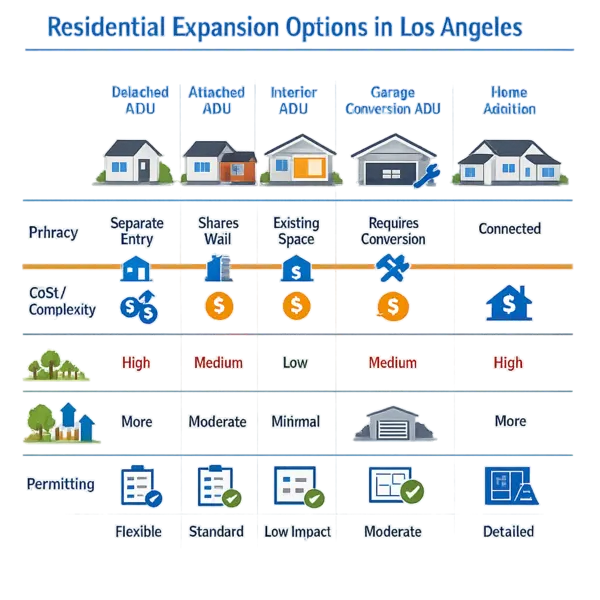
Detached, attached, interior, and garage conversion ADUs
Each ADU format offers a different balance of privacy, cost, and construction complexity:
- Detached ADU California: Highest privacy and flexibility; requires yard space and more site work.
- Attached ADU: Shares a wall with the main home; often more efficient utilities but less separation.
- Interior ADU: Converts existing space; minimal exterior impact but limited layout freedom.
- Garage conversion ADU California: Cost-efficient reuse of structure; parking and structural upgrades may be required. Explore Garage Conversions by Alvapareen Construction.
ADU vs home addition
An ADU creates a separate living unit, which may support rental income, multigenerational living, or resale flexibility. A home addition expands your primary residence instead, often better for growing households that don’t need a second unit. Compare with Home Addition Design & Construction Services.
For larger properties or long-term development goals, some owners evaluate broader new construction planning beyond a single ADU.
Once you identify the best fit, review detailed options for Accessory Dwelling Units (ADU) Design & Construction to align your design, budget, and site conditions.
Common ADU Mistakes to Avoid in California
Planning accessory dwelling units ADU California projects involves more than design ideas—it requires careful coordination with site conditions, regulations, and long-term use goals. Many delays and cost overruns come from avoidable early-stage mistakes.
Ignoring site and code constraints
Overlooking setbacks, utility connections, height limits, or access requirements can stall approvals. Early feasibility checks and understanding ADU requirements and zoning factors help prevent redesigns later.
Underbudgeting and rushing the timeline
Costs can shift due to permit revisions, utility upgrades, or finish selections. Assuming a fixed timeline without accounting for reviews or site work often leads to frustration. Build flexibility into both schedule and budget.
Overlooking livability and long-term use
Poor privacy, limited storage, or awkward layouts reduce usability over time. Whether for rental income, guests, or multi-generational living, thoughtful ADU design California planning improves comfort and property value.
Verifying rental assumptions, insurance considerations, and local review expectations early can prevent surprises. For a smoother path, many homeowners choose a guided approach through experienced teams like ADU design and construction specialists who align planning, permitting, and execution from the start.
How to Plan an ADU Project Before You Commit
Planning is the most important phase of any Accessory dwelling units adu california project. Before design or construction begins, a clear plan helps you avoid costly changes and ensures your project aligns with California ADU laws, your property conditions, and long-term goals.
Step 1: Define the purpose of the ADU
Start by deciding how you plan to use the unit. Whether it’s rental income, multi-generational living, guest space, or a home office, your purpose will guide layout, size, and design priorities. Clear goals also help determine the most suitable ADU type and budget direction.
Step 2: Review your property and budget
Evaluate your lot size, access points, existing structures, and utility connections. Feasibility often depends on site-specific conditions and local ADU regulations in California. Establish a realistic budget range early, understanding that ADU cost in California can vary based on design complexity, site work, and permitting requirements.
Step 3: Compare ADU types and verify local requirements
Compare detached, attached, interior, and garage conversion ADU options based on your property layout. Then verify zoning, setbacks, height limits, and parking rules. Reviewing ADU permitting and zoning requirements ensures your concept aligns with local and statewide standards.
Step 4: Organize documents and request a professional review
Gather key details like property surveys, inspiration ideas, budget notes, and usage goals. With this information, a professional can evaluate feasibility and recommend the most practical path forward.
For a deeper look at design and build options, explore Accessory Dwelling Units (ADU) Design & Construction to move from planning into a structured project strategy.
Frequently Asked Questions About ADUs in California
Eligibility and size questions
What qualifies as an accessory dwelling unit in California?
An ADU is a secondary, self-contained residential unit on the same lot as a primary home, with its own kitchen, bathroom, and entrance. Local jurisdictions may refine definitions based on zoning and property conditions.
How big can an ADU be in California?
ADU size limits in California often allow up to 800–1,200 square feet depending on type and property, with minimum allowances required by state law. Final size depends on local ADU regulations, lot size, and design constraints.
Permits, setbacks, height, and parking
Do I need a permit to build an ADU in California?
Yes, building an ADU in California requires permits and plan approval before construction begins. The exact ADU permitting process varies by city and should be verified during planning.
What are the setback and height rules for ADUs in California?
State law allows reduced setbacks, often around 4 feet for side and rear yards, with height limits commonly between 16–25 feet. Specific ADU setbacks and height limits vary by jurisdiction and property layout.
Is parking required for an ADU in California?
Parking requirements are often waived for ADUs near transit, in existing structures, or under certain exemptions. Local rules still apply, so parking requirements should be confirmed during review.
Cost, rentals, and timeline
How much does an ADU cost in California?
ADU cost in California varies widely based on size, design, site conditions, and whether it’s new construction or a conversion. A detailed estimate requires project-specific planning and contractor evaluation.
Can I convert my garage into an ADU in California?
Yes, garage conversion ADUs are commonly allowed and often benefit from relaxed zoning rules. Structural condition, utilities, and local code compliance will influence feasibility.
Can I rent out an ADU in California?
Yes, ADUs can typically be rented for long-term housing, making them a potential source of rental income in California. Short-term rental rules depend on local ordinances and should be reviewed carefully.
How long does the ADU permit and construction process usually take?
The ADU project timeline can range from several months to over a year, depending on design, approvals, and construction scope. Timelines vary by city review speed and project complexity.
What is the difference between state ADU law and local city rules?
California ADU laws set minimum standards that cities must allow, while local jurisdictions apply additional guidelines for design, zoning, and review. Final requirements reflect a combination of statewide rules and local interpretation.
When to Discuss Your ADU Plans With a Professional Team
As you evaluate accessory dwelling units ADU California projects, a short conversation with a qualified team can clarify feasibility, scope, and next steps. The goal isn’t to rush decisions—it’s to align your ideas with site conditions, local requirements, and a realistic construction approach.
Best time to reach out
The most useful time to connect is once you have a general direction—such as a detached ADU, garage conversion ADU, or addition—and initial questions about layout, budget range, or permitting. Early input can help you avoid redesigns and better understand how California ADU laws and local conditions may shape your project.
What to prepare before the conversation
- Intended use (rental income, multi-generational living, guest space)
- Property photos and any existing plans or surveys
- Approximate size or layout ideas
- Timing goals and priorities
- Budget expectations or constraints
To understand how your project fits together, review the service overview for Accessory Dwelling Units (ADU) Design & Construction. When you’re ready, you can discuss your plans with Alvapareen Construction and get practical guidance tailored to your property.
Final Takeaway on Planning an ADU in California
Planning Accessory dwelling units ADU California projects comes down to balancing opportunity with careful preparation. ADUs can create flexible living space, support multi-generational needs, and offer long-term rental potential—but success depends on aligning state guidelines with local review and your specific property conditions.
Key decisions to remember
- Choose the right unit type—detached, attached, or garage conversion
- Understand California ADU laws and local zoning requirements
- Plan a realistic budget based on design, site, and construction scope
- Expect timelines to vary depending on permitting and complexity
- Work with experienced professionals to evaluate feasibility before building
With the right planning approach, an ADU becomes a strategic investment in how your property functions and grows. To explore design options and construction details, review Accessory Dwelling Units (ADU) Design & Construction and take the next informed step forward.