
ADU Requirements: Permits, Zoning, Size Rules, Costs, and Planning Guide
What to Know Before You Start an ADU Project
Understanding ADU requirements is the first step for homeowners and property owners planning to add an accessory dwelling unit for rental income, multigenerational living, or long-term property value. Before design ideas take shape, it’s essential to know that ADU projects are governed by a mix of zoning rules, lot conditions, size limits, setbacks, parking, utility connections, permits, and building codes. These requirements are influenced by both state policies and local ordinances, which means no two properties follow the exact same path.
Starting with a clear understanding of these factors can help reduce redesigns, avoid delays, and create a smoother approval process. At Alvapareen Construction, our approach is Built for Transformation—grounded in planning that aligns vision with compliance from day one.
Why ADU requirements come first
Reviewing ADU zoning standards and building codes early helps determine whether your project is feasible, how large it can be, where it can sit on the property, and what approvals are needed. These factors directly shape your layout, budget, and overall project timeline before design decisions are finalized.
What this guide covers
This guide breaks down key ADU regulations, including permits, design standards, size limits, cost considerations, and common mistakes to avoid. You’ll also find a step-by-step planning overview and practical insights to help you move forward with confidence.
What ADU Requirements Usually Include
A clear definition
ADU requirements are the combined zoning, permitting, design, utility, and building code standards that govern how an accessory dwelling unit can be legally built and used on a residential property. These rules come from both state-level housing laws and local city or county ordinances, which means the exact requirements can vary depending on your parcel and jurisdiction.
In practice, ADUs may be detached, attached, or converted from existing space such as a garage or basement. While California has streamlined many ADU regulations, local agencies still review plans for compliance with site-specific standards. Working with an experienced ADU design-build team helps ensure your project aligns with both state guidelines and local approval processes.
The main rule categories to review
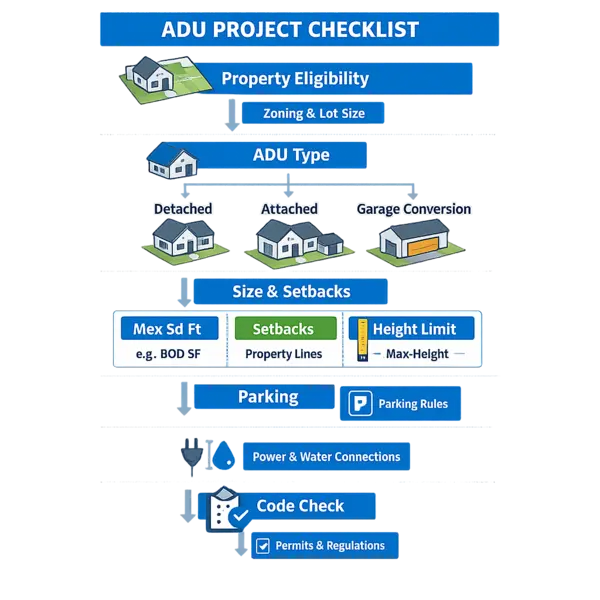
Most ADU regulations fall into a set of core categories that determine feasibility, design, and approval:
- Property eligibility: zoning designation, lot size, and existing structures
- ADU type: detached, attached, or conversion of existing space
- Size limits and layout: maximum square footage, floor plans, and design standards
- Setbacks and height: required distances from property lines and allowable building height
- Parking requirements: off-street parking rules that vary by location and transit access
- Utilities: water, sewer, and electrical connections or shared systems
- Permits and plan review: local approval process, documentation, and inspections
- Safety and building codes: fire safety, structural standards, and habitability requirements
Additional factors like owner-occupancy rules, impact fees, and architectural guidelines may apply depending on the jurisdiction. Because ADU zoning standards and building codes can change, requirements should always be confirmed with the local reviewing authority before starting construction.
Zoning, Size, and Design Rules That Shape an ADU
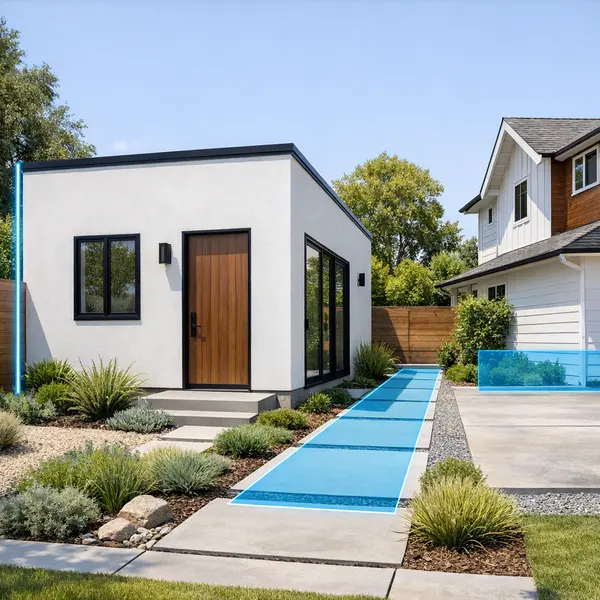
Before moving into design or construction, understanding ADU requirements is critical. Zoning, size limits, and building rules often determine whether your accessory dwelling unit is feasible—and how it must be designed. These factors can vary by jurisdiction and site conditions, which is why early planning matters.
At a high level, ADU zoning standards and building constraints influence layout, placement, and cost. For a deeper look at how these requirements translate into real-world construction, see Accessory Dwelling Units (ADU) Design & Construction. Broader permitting considerations may also apply, similar to those outlined in new construction planning and permit processes.
Property eligibility and ADU type
Eligibility often depends on your lot size, existing structures, and zoning designation. Detached ADUs, attached additions, and conversion units (such as garages) may follow different approval paths. For example, conversion projects may reuse existing structures but still require upgrades to meet current ADU building codes. Many homeowners also explore Garage Conversions by Alvapareen Construction as a practical alternative to new builds.
Size, setbacks, height, and parking
ADU size limits typically define maximum square footage, while setbacks and height restrictions control placement on the lot. These rules can affect privacy, access, and overall design. ADU parking requirements may also apply depending on proximity to transit, existing parking, and local regulations, and can influence site layout.
Utilities and code compliance
Utility planning includes decisions around shared or separate ADU utility connections, which can impact both design and cost. In addition, code compliance may require structural upgrades, proper egress, fire safety measures, and energy-efficiency standards. These considerations ensure the ADU is safe, functional, and aligned with current building expectations.
Because these requirements vary, confirming details with a qualified ADU contractor or local authority is an essential step before finalizing plans.
Why Homeowners Build ADUs and What to Plan For
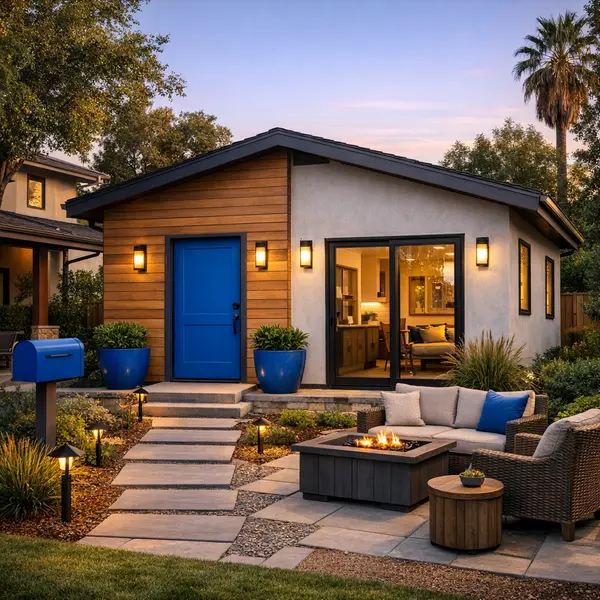
Understanding ADU requirements is only part of the equation—knowing why homeowners choose to build an accessory dwelling unit helps shape smarter planning decisions. ADUs offer flexibility, but they also require thoughtful coordination of zoning, design, utilities, and long-term use.
Common ADU use cases
Many homeowners build an ADU for family living, such as housing adult children, aging parents, or live-in caregivers. Others explore an ADU for rental income or guest accommodations. These use cases can make better use of existing property while supporting multigenerational living and more efficient land use.
For example, an ADU for family may prioritize privacy and accessibility, while an ADU for rental income may focus more on layout efficiency and separate access. In both cases, ADU zoning standards, parking considerations, and utility connections play a key role in feasibility.
Benefits versus planning realities
While ADUs can increase property functionality and may influence ADU property value, outcomes vary based on design quality, location, and market conditions. Every project must balance benefits with ADU permits, building codes, and site constraints such as access, privacy, and neighborhood fit.
Thoughtful planning also includes budgeting for construction, ongoing maintenance, insurance considerations, and how the ADU integrates with the main home and outdoor space. For a structured approach, explore Accessory Dwelling Units (ADU) Design & Construction to evaluate how a professionally planned project aligns with your goals.
Cost, Timeline, and Budget Factors for ADU Projects
Understanding ADU requirements is essential when planning your budget and schedule. The total ADU cost and timeline can vary significantly depending on design choices, site conditions, and local regulations. Whether you’re building a detached accessory dwelling unit or converting an existing structure, a clear planning framework helps avoid costly surprises.
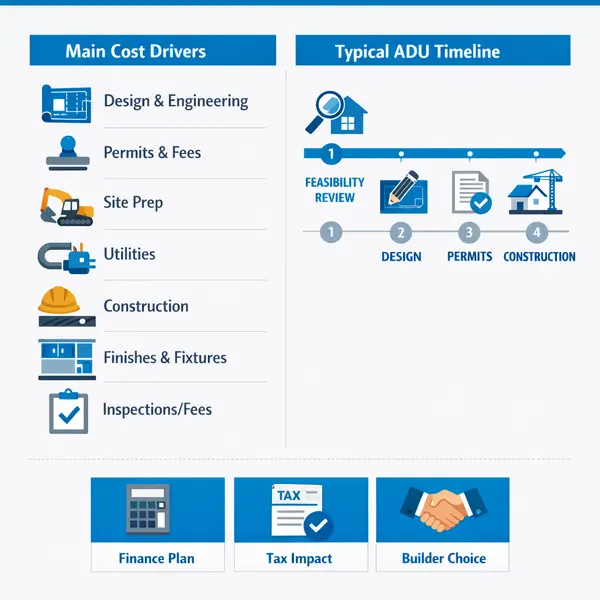
Main cost drivers
- Design, architecture, and engineering plans
- Permits, plan check fees, and ADU permits
- Site preparation, grading, and access constraints
- Utility connections such as water, sewer, and electrical upgrades
- Construction labor, materials, and structural work
- Interior finishes, fixtures, and appliances
- Inspections, impact fees, and jurisdiction-specific requirements
Costs also depend on the type of ADU, lot layout, and compliance with ADU zoning standards and building codes. For a deeper look at design and construction options, visit our ADU design and construction services.
What affects the project timeline
A typical ADU project timeline includes feasibility review, design development, permit approval, and construction. Delays can occur due to plan revisions, agency reviews, utility coordination, or site challenges. Working with an experienced ADU contractor can help streamline each phase.
Budget planning should also consider ADU financing, tax implications, and insurance updates. For broader guidance on planning costs and selecting the right builder, see our construction planning and cost guide.
Common ADU Mistakes to Avoid
Understanding ADU requirements early can prevent costly redesigns, delays, and long-term usability issues. Many projects run into avoidable problems simply because key planning steps were skipped. Use this practical ADU checklist of common mistakes to stay on track.
Mistakes in feasibility and design
- Starting design before confirming ADU zoning standards: This often leads to plans that violate setbacks, height limits, or ADU size limits—triggering revisions.
- Ignoring site constraints: Grading, utility routing, and access challenges can significantly affect layout and cost.
- Assuming garage conversions are simple: Structural upgrades and code compliance are common hurdles. Learn more about Garage Conversions by Alvapareen Construction.
- Overlooking privacy and access: Poor placement can impact both the main home and the accessory dwelling unit’s livability.
- Designing without future use in mind: Flexible layouts support rental, family use, or resale value.
Mistakes in budgeting and team selection
- Underestimating ADU cost factors: Utilities, permits, and site work can add up beyond basic construction.
- Working without a clear scope: Vague plans often lead to change orders and delays.
- Choosing inexperienced teams: ADU permits and building codes require specialized knowledge.
- Ignoring long-term considerations: Insurance, taxes, and maintenance should be reviewed early in planning.
A structured, checklist-based approach—and early coordination with experienced professionals—can reduce risk. For a streamlined path from concept to construction, explore Accessory Dwelling Units (ADU) Design & Construction services tailored to your project.
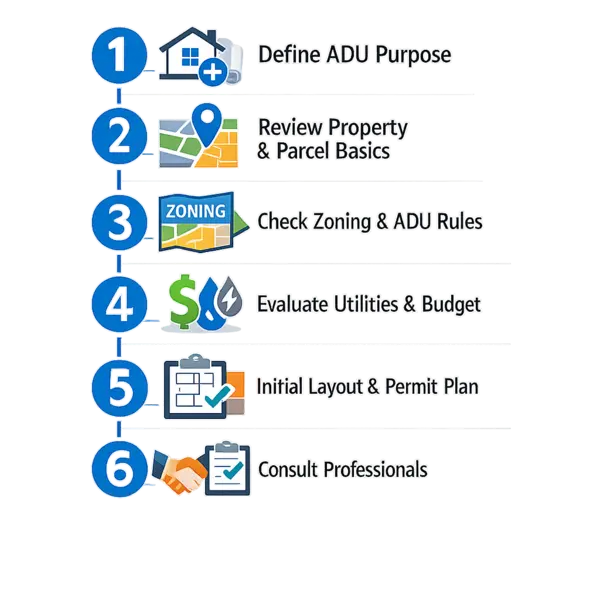
How to Check ADU Requirements Before You Build
Before starting any accessory dwelling unit project, it’s essential to understand the full scope of ADU requirements that apply to your property. This step-by-step workflow helps you move from idea to informed planning while avoiding costly surprises.
Step 1: Define the purpose of the ADU
Decide how the unit will be used—rental income, family housing, or flexible living space. Your goal influences design, size, and compliance priorities.
Step 2: Review the property and parcel basics
Evaluate your lot layout, existing structures, access points, and terrain. These factors shape what type of ADU is feasible.
Step 3: Check zoning and ADU requirements
Verify local ADU zoning standards, size limits, setbacks, height rules, and parking requirements. Regulations vary and should always be confirmed with your local jurisdiction.
Step 4: Evaluate utilities and budget factors
Consider utility connections, site work, permit costs, and overall ADU cost range. Early budgeting helps guide realistic decisions.
Step 5: Develop a preliminary layout and permit plan
Create a basic concept that aligns with your site and ADU building codes. Map out the likely permit path and approval process. For broader context, review this permit and planning guide.
Step 6: Consult the right professionals
Before committing to construction, discuss your project with experienced professionals. A qualified ADU contractor can validate feasibility, refine your plan, and help navigate permits.
Ready to move forward? Explore Accessory Dwelling Units (ADU) Design & Construction services or take the next step below.
Frequently Asked Questions About ADU Requirements
What are the basic requirements for building an ADU?
ADU requirements typically include zoning eligibility, size limits, setbacks, and compliance with local ADU building codes. You’ll also need approved plans, permits, and utility access. Requirements vary, but most projects must meet safety, structural, and access standards before construction begins.
Do ADU requirements vary by city or county?
Yes. While state laws set baseline ADU regulations, local jurisdictions control zoning rules, design standards, and review processes. Always confirm city or county-specific ADU zoning standards before planning your project.
How big can an accessory dwelling unit be?
ADU size limits depend on your property and local regulations. Many areas allow units between 800 and 1,200 square feet, but the maximum size can vary based on lot size, zoning, and whether the ADU is attached or detached.
Do ADUs require separate utility connections?
Not always. Some accessory dwelling unit projects can share utilities with the main home, while others require separate connections for water, sewer, or electricity. Requirements depend on local codes and utility provider policies.
Are parking spaces required for an ADU?
ADU parking requirements vary. In many cases, no additional parking is required, especially if the property is near public transit or involves a garage conversion. Always confirm current local rules, as exceptions are common.
Can I convert a garage into an ADU?
Yes, garage conversions are one of the most common ways to build an ADU. These projects must still meet ADU design standards, including insulation, ceiling height, ventilation, and egress requirements.
How long does the ADU permit process usually take?
The ADU permit timeline varies based on the city, project complexity, and completeness of your plans. Some approvals are faster under streamlined laws, but delays can still occur due to revisions or site-specific factors.
Do I need an architect or contractor for an ADU project?
While not always legally required, working with an experienced ADU contractor or designer helps ensure compliance with ADU building codes and avoids costly mistakes. For broader planning guidance, you can also review resources like this construction planning guide.
Will an ADU increase property value?
An ADU may increase property value by adding usable living space or rental potential. The impact depends on design quality, location, and market conditions, so it should be evaluated as part of your overall investment strategy.
What should I check before applying for ADU permits?
Before applying, review zoning eligibility, setback requirements, lot size, utility access, and local ADU regulations. Preparing accurate plans and understanding site constraints early can help streamline the approval process.
When to Get Professional Help With an ADU Project
Understanding ADU requirements is a strong start, but many projects reach a point where professional guidance becomes the practical next step. If you are weighing design options, reviewing zoning constraints, or trying to align your budget with permitting and construction realities, early input can help you avoid costly revisions later.
Signs it is time to consult a professional
- Your lot has space, access, or zoning limitations that affect ADU design standards
- You are deciding between a detached accessory dwelling unit, garage conversion, or home addition
- ADU permits, building codes, or utility connections feel unclear
- You need a realistic understanding of ADU cost and project scope
Working with an experienced team like Alvapareen Construction can help you evaluate your property, clarify ADU zoning standards, and map out a structured plan before committing to final designs. Explore our Accessory Dwelling Units (ADU) Design & Construction services to see how a guided approach supports smoother planning.
Final Thoughts on Planning for ADU Requirements
Understanding ADU requirements is the foundation of a successful accessory dwelling unit project. From zoning rules and design standards to permits, utilities, cost planning, and construction sequencing, each step plays a role in whether your project moves forward smoothly. While general guidelines are helpful, the exact requirements can vary based on your property, local regulations, and reviewing agencies—making early feasibility review essential.
A structured approach helps reduce surprises, align your design with ADU building codes, and support better decisions around budget and timeline. Whether you’re planning a garage conversion, home addition, or detached unit, taking the time to evaluate these factors upfront can make the entire process more predictable and efficient.
Key takeaways
- ADU regulations vary by property, zoning, and local authority
- Feasibility and site conditions should be reviewed before design
- Permits, utilities, and cost planning must be aligned early
- A structured review process helps avoid delays and redesigns
If you’re ready to move from research to planning, explore Accessory Dwelling Units (ADU) Design & Construction to understand your options, then discuss your construction plans with Alvapareen Construction.