
Accessory Dwelling Units ADU Requirements: What Property Owners Need to Know
Accessory Dwelling Units ADU Requirements at a Glance
Understanding Accessory dwelling units ADU requirements is the first step toward building a functional, compliant secondary living space. An ADU is a self-contained residential unit—complete with its own kitchen, bathroom, and entrance—located on the same lot as a primary home. Whether you’re planning a detached ADU, attached addition, or garage conversion, the rules go beyond basic design and into zoning, utilities, and permitting.
This guide is designed to simplify complex regulations into practical insights you can actually use. At Alvapareen Construction, we approach every project with a clear mindset: Built for Transformation—balancing code compliance with smart design decisions.
What This Guide Covers
- Core ADU requirements: zoning standards, size limits, and setbacks
- Parking rules, utility connections, and design considerations
- Differences between detached, attached, and junior accessory dwelling units
- Common planning mistakes and how to avoid delays
- Steps to prepare for permits and construction
Why Requirements Need Context
Reading raw accessory dwelling unit requirements alone can be misleading. Rules like ADU size limits, setback requirements, or parking standards often interact with your specific lot conditions, existing structures, and local permitting processes. This article connects those rules to real-world planning decisions—so you can move forward with clarity instead of guesswork.
What Counts as an ADU and Which Type Fits Your Property
Understanding Accessory dwelling units ADU requirements starts with knowing what actually qualifies as an ADU and which type aligns with your property. Whether you’re planning a backyard unit or converting existing space, the category you choose affects design, permits, utilities, and overall feasibility.
What Is an Accessory Dwelling Unit
An accessory dwelling unit is a self-contained secondary home located on the same lot as a primary residence. It must include independent living, sleeping, kitchen, and bathroom facilities. Unlike a simple home addition or guest room, an ADU functions as a complete dwelling with its own entrance and essential utilities, meeting specific ADU requirements and local zoning standards.
Detached, Attached, Interior, and Garage Conversion Options
The right ADU type depends on your lot, existing structure, and goals:
- Detached ADU: A separate structure offering maximum privacy and design flexibility, but typically requiring new utility connections.
- Attached ADU: Built onto the main home, often sharing walls and some systems, making it more space-efficient.
- Interior Conversion: Created within existing space (like a basement or unused rooms), minimizing structural expansion.
- Garage Conversion ADU: Converts an existing garage into livable space. Learn more about Garage Conversions by Alvapareen Construction.
Each path has different implications for ADU size limits, setbacks, and utilities, which should be evaluated early in planning. For a broader overview, see Accessory Dwelling Units ADU California: Rules, Costs, Process, and Planning Guide.
Accessory Efficiency and Junior ADU Variants
Smaller formats can meet specific needs and site constraints. An accessory efficiency dwelling unit is a compact ADU with a limited kitchen setup, often capped in size and designed for streamlined living. A junior accessory dwelling unit (JADU) is typically created within the primary home, may share a bathroom, and includes an efficiency kitchen. These options can simplify certain accessory dwelling unit requirements, but still depend on the existing home layout and local eligibility rules.
Choosing the right type is the first step toward a successful project. Explore Accessory Dwelling Units (ADU) Design & Construction to understand how each option can be planned and built effectively.

Core ADU Requirements Property Owners Should Review First
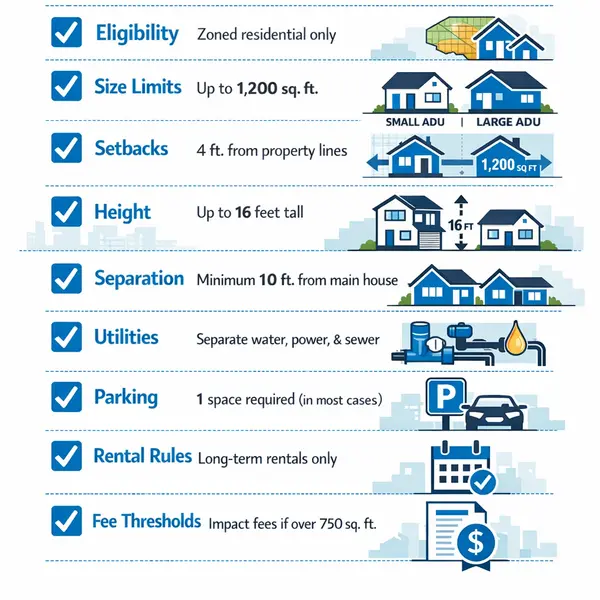
Before starting design, it helps to break down accessory dwelling units ADU requirements into a practical checklist. While exact standards vary by jurisdiction, most projects follow a consistent framework covering eligibility, size, setbacks, utilities, and use. Use this as a planning reference to identify potential constraints early and avoid costly redesigns.
Site Eligibility and Unit Count Rules
- Property must typically be zoned for residential use with an existing or proposed primary dwelling.
- Most properties allow one ADU and one junior accessory dwelling unit (JADU), depending on layout and compliance.
- Certain overlay zones, historic districts, or hazard areas may add restrictions or require additional review.
- A junior accessory dwelling unit is usually created within the main home and follows separate size and kitchen rules.
Size, Height, Setback, and Separation Standards
- ADU size limits often include a minimum (commonly around 150 sq ft) and maximum ranges based on property and unit type.
- Units up to 800 sq ft may be allowed with fewer constraints, while larger ADUs may be subject to lot coverage rules.
- ADU setback requirements typically allow reduced side and rear setbacks, but front setbacks depend on the main home’s placement.
- Height limits vary for detached ADU requirements vs. attached units and may increase near transit or multi-story zones.
- Building separation and fire safety spacing can apply, especially in high-risk areas—these should be confirmed during planning.
- Roof eaves may be included in setback measurements, which can affect design dimensions.
Utilities, Parking, and Use Rules
- ADU utilities may be shared or separately metered depending on the project type and local policies.
- ADU parking requirements are often reduced or waived, especially near public transit or for garage conversion ADU projects.
- Rental use typically requires minimum lease terms; short-term rentals may be restricted or prohibited.
- Development impact fees for ADU may apply to larger units, while smaller ADUs are often exempt.
- All units must meet basic ADU kitchen requirements and ADU bathroom requirements for independent living.
For a deeper breakdown of zoning, permits, and planning considerations, see ADU Requirements: Permits, Zoning, Size Rules, Costs, and Planning Guide.
How ADU Requirements Shape Design, Function, and Budget
Understanding Accessory dwelling units ADU requirements early isn’t just about compliance—it directly influences how your space is designed, how it functions day to day, and how your budget is structured. Planning factors like setbacks, utilities, and zoning standards act as real design drivers, shaping everything from layout efficiency to construction scope.
Why Early Rule Review Matters
Early feasibility review reduces costly surprises. When ADU requirements are evaluated upfront, you can avoid redesigns caused by setback conflicts, utility access issues, or parking constraints. This proactive approach helps streamline permitting, align expectations, and keep your project moving without unnecessary scope changes.
How Rules Affect Layout and Livability
Design decisions are closely tied to accessory dwelling unit requirements. Setbacks and fire separation rules influence building placement and window locations, while ADU kitchen requirements and ADU bathroom requirements determine how efficiently space is used. Entry placement, privacy from the main home, and circulation paths all depend on these constraints, especially in compact layouts like a garage conversion ADU or junior accessory dwelling unit.
How Rules Affect Budget and Scope
Budget is heavily influenced by compliance-related scope. Utility connections, site conditions, and ADU setback requirements can affect excavation, trenching, and foundation work. Detached units may require more extensive infrastructure compared to attached or conversion options, while fire-rated construction and parking considerations can further shape costs. These are key budget drivers that vary by project and should be evaluated carefully.
Working with a team experienced in ADU design and construction helps align regulatory requirements with practical design solutions—so your space is not only compliant, but also functional, adaptable, and built for long-term use such as rental income or multigenerational living.
Comparing Detached, Attached, and Conversion ADU Options
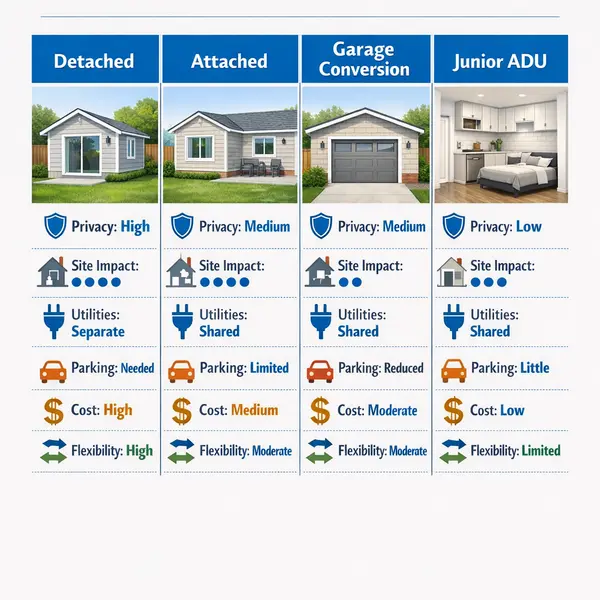
Understanding accessory dwelling units ADU requirements starts with choosing the right type of unit for your property. Detached, attached, and conversion ADUs each follow different planning considerations related to space, utilities, privacy, and construction complexity. The best option depends on your lot layout, existing structure, and long-term goals.
The overview below compares common ADU requirements and tradeoffs so you can evaluate which path aligns with your property before investing in design or permits.
When a Detached ADU Makes Sense
Detached ADUs are separate structures, often placed in a backyard or side yard. These typically offer the highest level of privacy and independent access, making them suitable for rentals or multi-generational living. However, detached ADU requirements often involve more site planning, utility connections, and adherence to setback and placement rules. They may also require more construction time and coordination depending on site conditions.
When an Attached ADU May Be More Efficient
Attached ADUs share at least one wall with the primary home, which can simplify certain structural and utility connections. These attached ADU requirements can make them more space-efficient on smaller lots. However, design flexibility may be limited by the existing structure, and achieving privacy separation often requires careful layout planning.
When a Garage Conversion or Interior ADU Is Worth Considering
A garage conversion ADU or interior conversion repurposes existing space, often reducing construction impact and speeding up timelines. These options can be cost-conscious, but feasibility depends on structural integrity, ceiling height, and compliance with ADU kitchen requirements, ADU bathroom requirements, and parking regulations. Converting a garage may also affect ADU parking requirements, which should be reviewed early.
In some cases, a junior accessory dwelling unit (JADU) may be worth considering for smaller-scale needs, especially when space is limited and shared utilities are acceptable.
For a deeper breakdown of design, zoning, and construction pathways, explore Accessory Dwelling Units (ADU) design and construction services to better understand how each option can be tailored to your property.
Common ADU Planning Mistakes That Lead to Delays
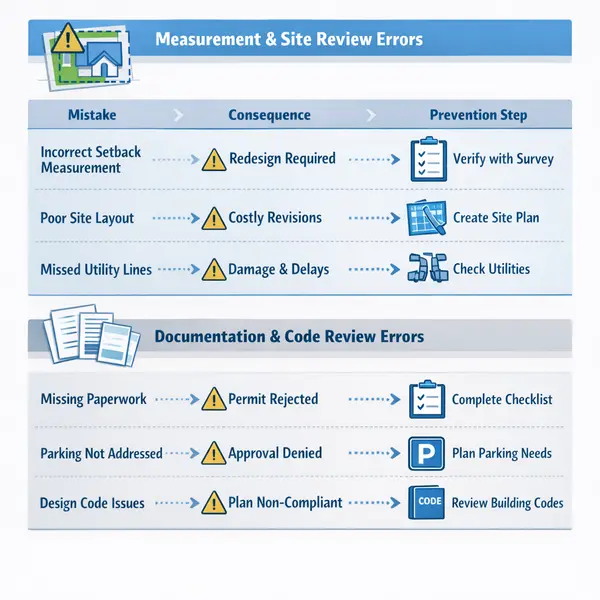
Even well-intentioned projects can stall when key accessory dwelling units ADU requirements are misunderstood early. Most permit delays come from avoidable planning gaps—especially around measurements, zoning interpretation, and documentation. The issues below are common across both detached ADU requirements and garage conversion ADU projects.
Measurement and Site Review Errors
- Incorrect setback measurements: Misreading property lines or failing to include roof eaves can trigger redesigns. Prevent it: verify dimensions against survey data and local ADU setback requirements.
- Ignoring building separation: Minimum distances between structures are often overlooked. Prevent it: confirm spacing rules before finalizing layout.
- Assuming lot coverage limits: Not all properties allow the same footprint. Prevent it: review zoning maps and ADU zoning standards carefully.
- Parking assumptions: Some assume ADU parking requirements always apply—or never do. Prevent it: check location-based exemptions and transit rules.
Documentation and Code Review Errors
- Incomplete plan sets: Missing elevations, sections, or notes can delay review. Prevent it: submit clear, coordinated documentation.
- Weak utility planning: Unclear ADU utilities, drainage, or electrical layouts create revisions. Prevent it: define connections early.
- Design mistakes: Layouts that don’t support ADU kitchen requirements, bathroom requirements, or independent access fail review. Prevent it: design to code from the start.
- Missing structural and life-safety coordination:Prevent it: involve qualified professionals to review code compliance before submittal.
For a broader walkthrough of zoning, permits, and planning steps, see this ADU requirements guide to avoid zoning and permit mistakes. Early coordination with Permit, Plan & Engineering Services for Construction Projects can help reduce revisions and keep your timeline moving.

How to Check ADU Requirements Before You Start
Understanding accessory dwelling units ADU requirements early can prevent costly redesigns and delays. Use this step-by-step process to evaluate feasibility before committing to full plans or permits.
Step 1: Review Basic Property Eligibility
Confirm your property includes or allows a primary residence. Check for zoning limits, overlays, or special districts that may affect accessory dwelling unit requirements. Eligibility can vary by parcel.
Step 2: Choose the Most Practical ADU Type
Compare detached ADU, attached ADU, garage conversion ADU, junior accessory dwelling unit, or accessory efficiency dwelling unit. Consider available space, privacy, and existing structures.
Step 3: Check Size, Height, Setbacks, and Separation
Review ADU size limits, ADU setback requirements, height caps, and required spacing from other structures. This ensures your target layout fits before design begins.
Step 4: Plan Access, Utilities, and Parking
Evaluate independent access, ADU utilities (water, sewer, electrical), and ADU parking requirements or exemptions. These factors can significantly affect scope and cost.
Step 5: Assemble Documentation and Get Professional Review
Gather site details, sketches, and planning notes. Coordinate permit and engineering documentation, then review feasibility with a qualified team. For a full project overview, explore this ADU planning guide or learn more about ADU design and construction services before moving forward.
Because ADU zoning standards and interpretations can vary, a professional review helps confirm what’s realistically achievable for your specific property.
Accessory Dwelling Units ADU Requirements FAQ
Size and Dimensional Questions
What is the minimum size for an accessory dwelling unit?
Minimum ADU size requirements typically start around 150 to 220 square feet for an accessory efficiency dwelling unit, but most jurisdictions set practical minimums closer to 400 square feet for full living functionality. Final limits depend on local ADU zoning standards and building codes.
How many ADUs are allowed on one residential property?
In many areas, property owners can build one primary ADU and one junior accessory dwelling unit on a single-family lot. Multifamily properties may allow more, depending on existing units and local regulations. Always verify based on your parcel and zoning designation.
What are the setback requirements for an ADU?
Typical ADU setback requirements are around 4 feet from rear and side property lines, especially for detached ADUs. Front setbacks and height limits vary based on zoning and lot configuration. Site-specific review is required before final design.
Utilities, Parking, and Rental Questions
Do detached ADUs need separate utility connections?
Detached ADU requirements vary. Some projects require separate utility meters, while others can share services with the main home. Water, sewer, and electrical setups depend on capacity, local utility policies, and project design.
Does an ADU always require an extra parking space?
No. ADU parking requirements are often waived if the property is near public transit, within certain zoning areas, or part of a garage conversion ADU. Parking rules vary significantly by location and property conditions.
What is the difference between an ADU and a junior ADU?
A standard ADU is a fully independent unit with its own kitchen, bathroom, and entrance. A junior accessory dwelling unit (JADU) is smaller, typically within the main home, and may share a bathroom while still requiring an efficiency kitchen.
Can an ADU be rented out short term?
Most jurisdictions restrict short-term rentals for ADUs. Long-term rental is commonly allowed, but minimum lease durations may apply. Always confirm local ADU rental rules before planning income use.
Are development impact fees required for every ADU?
Not always. Development impact fees for ADU projects are often waived or reduced for smaller units under a certain size threshold. Larger ADUs may still trigger fees depending on square footage and jurisdiction policies.
Process and Eligibility Questions
How do I know if my property is in an ineligibility district or overlay zone?
You’ll need to review your property’s zoning map and planning overlays through your local planning department. Some areas have restrictions that affect ADU size limits, height, or placement. A professional review helps identify these early.
What documents are usually needed before starting the ADU permit process?
Most projects require a site plan, preliminary floor plans, property survey, and utility layout. Additional documents may include structural concepts and zoning clearance. Requirements vary, so confirming with your local authority before submission is essential.
Next Steps for Planning a Code-Aware ADU Project
If you’ve been researching accessory dwelling units ADU requirements and want clarity on what’s possible for your property, a structured consultation is the most practical next step. Reviewing your goals alongside zoning, layout options, and build considerations helps turn general guidelines into a workable plan.
Start by exploring our Accessory Dwelling Units (ADU) Design & Construction service to understand how we approach feasibility, design, and construction planning.
Who Should Reach Out Next
Property owners with a specific ADU type in mind—such as a detached ADU, garage conversion, or junior accessory dwelling unit—or those with early questions about size limits, setbacks, or utilities will benefit most from a guided review.
What to Bring to a Consultation
Bring basic property details, your preferred ADU layout, approximate dimensions, and any questions about ADU zoning standards, parking, or construction scope. This helps keep the conversation focused and productive.
Final Thoughts on Understanding ADU Requirements
Navigating accessory dwelling units ADU requirements becomes far more manageable when you approach them as a complete system rather than a checklist of separate rules. From choosing the right unit type—such as a detached ADU, attached ADU, or junior accessory dwelling unit—to evaluating site eligibility, size limits, setbacks, utilities, parking, and permitting, every factor works together to shape a successful project.
In practice, interpreting these requirements in the context of your specific property is just as important as understanding the standards themselves. Zoning, layout constraints, and existing structures all influence how ADU regulations apply in real-world scenarios.
Key Takeaway
The most effective way to approach ADU planning is to evaluate all requirements—design, zoning, utilities, and compliance—together as part of a unified strategy tailored to your property.
If you’re ready to move forward, explore Accessory Dwelling Units (ADU) Design & Construction to better understand your options or take the next step by connecting with a professional team.