
New Construction Homes California: What to Know Before You Build or Buy
Why New Construction Homes in California Need a Smarter Plan
Exploring new construction homes California offers exciting possibilities—but it’s rarely as simple as choosing a floor plan or touring a model home. Whether you’re comparing new construction communities or planning a fully custom build, the decisions ahead involve more moving parts than most buyers expect. From early planning and builder selection to timelines, inspections, financing, and evolving energy standards, each step plays a critical role in how your project turns out.
This guide is designed to help you navigate both paths—buying or building—with clarity. You’ll learn what shapes California new construction real estate decisions, what to watch for, and how to approach each phase with confidence. At Alvapareen Construction, everything we do is Built for Transformation, and that starts with helping you make informed, practical choices from day one.
Why the California market changes the decision
California’s construction landscape adds layers of complexity that don’t exist in many other states. Land availability, local building codes, permitting processes, and strict energy efficiency requirements all influence how new build homes California projects are planned and executed. Timelines can vary based on jurisdiction, and even choosing between new construction houses for sale and a ground-up build involves trade-offs tied to location, customization, and long-term value.
Who this guide helps
This article is built for a wide range of readers. If you’re looking to buy a new construction home in a planned community, planning a custom residence, or evaluating investment opportunities in new home communities California, you’ll find practical insights here. It’s equally useful for first-time buyers navigating the new build home buying process and experienced property owners seeking a clearer path through California’s construction environment.
What Counts as New Construction Homes in California?
New construction homes California refers to residential properties that are newly built and have never been occupied. This includes everything from fully custom homes built on raw land to move-in-ready houses developed within planned communities. While the term sounds simple, it actually covers several distinct paths buyers and property owners take when entering the California new homes market.
Depending on your goals, you may work with a builder, developer, contractor, or real estate agent. If you’re planning a ground-up project, exploring new construction services for custom homes and developments can help clarify what’s involved from planning through completion.
Custom build vs builder inventory
A custom build means hiring a contractor to design and construct a home from scratch—often on land you already own or plan to purchase. In contrast, builder inventory or new build homes California typically refers to homes designed and constructed by developers, either completed or near completion, and sold as part of new construction communities.
Common property types included in the search
- Single-family new construction houses for sale
- Townhomes and duplex-style residences
- Small multi-unit residential developments
- Planned new home communities California
Why the path changes the process
The way you enter the new construction home search directly affects timelines, costs, and decisions. Buying from a developer often involves preset layouts and upgrade options, while building from the ground up requires more involvement in design, permitting, and construction coordination. Each path also differs in contracts, inspections, and flexibility, so understanding these differences early helps you choose the right approach.
Benefits of New Construction Homes in California and the Tradeoffs to Expect
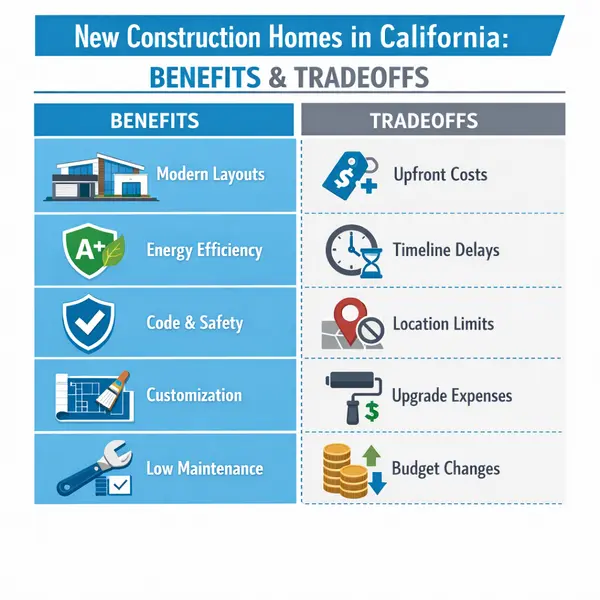
Choosing new construction homes California buyers can customize often comes down to balancing modern advantages with practical constraints. Whether you’re exploring new construction communities or comparing new construction houses for sale to resale properties, it helps to understand both sides before you commit.
Why buyers and owners often prefer new builds
- Modern layouts: Open floor plans, larger kitchens, and flexible living spaces designed for current lifestyles.
- Energy efficiency: California building standards often support improved insulation, HVAC systems, and energy performance.
- Lower early maintenance: New systems, roofing, and materials typically reduce near-term repair needs.
- Customization options: Finishes, fixtures, and layout adjustments can align the home with your preferences.
- Code-compliant construction: Built to current safety and seismic standards compared to many older homes.
Where expectations can go off track
- Upfront costs and upgrades: Base prices may not include premium finishes, which can increase total investment.
- Timeline variability: Permitting, site conditions, and supply factors can affect completion schedules.
- Lot and location limits: Availability in new home communities California buyers prefer may be restricted.
- Budget flexibility: Change orders or design upgrades can shift costs during the build process.
If you’re weighing whether to buy new construction home or build from the ground up, a structured approach helps align goals with reality. A professional team offering new construction services for custom homes and developments can translate your vision into a clear plan while accounting for site, budget, and regulatory factors.
For a deeper look at planning, costs, and selecting the right builder, see New Construction: A Practical Buyer Guide for Planning, Costs, and Builder Selection.
How the New Construction Process Works in California
Understanding how new construction homes California projects unfold helps you plan smarter and avoid costly surprises. Whether you’re building from the ground up or navigating a new build home buying process in a planned community, the steps follow a structured sequence with key decision points along the way.
1. Start with goals, scope, and feasibility
Every project begins with defining your goals: custom home, investment property, or purchase in a development. This stage includes setting a realistic budget, identifying a lot or evaluating new construction communities, and confirming feasibility. Site conditions, zoning, and local requirements can all influence what’s possible, so early evaluation is essential before moving forward.
2. Move through design, approvals, and contracts
Next comes design development and planning. For custom builds, this includes architectural plans, engineering, and coordination. For buyers, it may involve selecting layouts, finishes, and upgrades. Permitting and jurisdiction review timelines vary across California and depend on complexity. Before construction begins, contracts, scope, and documentation should be clearly aligned. For a deeper breakdown of permits and expectations, see this guide on construction process and approvals.
3. Build, inspect, and complete the project
Construction progresses through phases such as site work, foundation, framing, systems installation, and interior finishes. Inspections occur at key milestones to ensure compliance. Near completion, a punch list identifies final adjustments before the walkthrough and project turnover. Timelines can shift due to material lead times, change orders, or site-specific conditions.
To explore how these steps translate into a full-service experience, review New Construction Services for Custom Homes & Developments offered by Alvapareen Construction.
Buying a New Construction Home vs Building One vs Buying Resale
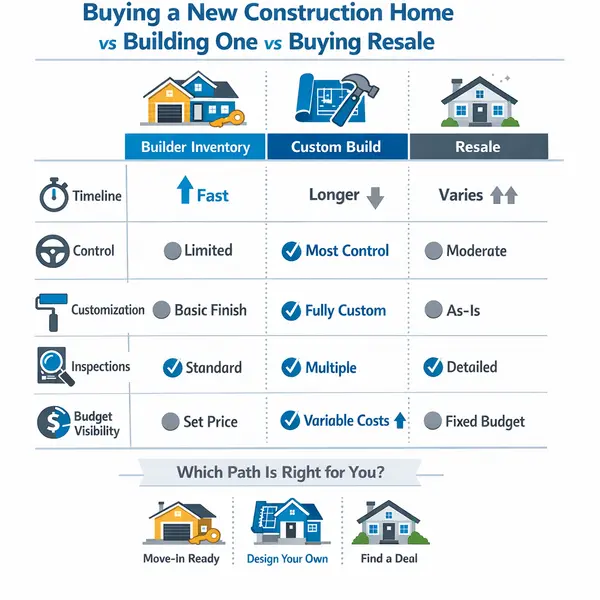
When exploring new construction homes California, most buyers are deciding between three paths: purchasing builder inventory, building a custom home, or buying a resale property. Each option differs in timeline, control, customization, inspections, and budget visibility. The right choice depends on your priorities, risk tolerance, and long-term plans.
When builder inventory makes sense
Builder inventory—either move-in ready or pre-construction homes in new construction communities—offers the fastest path. Buyers benefit from predictable layouts, bundled upgrades, and community amenities. This approach works well if you want a streamlined new construction home search and fewer decisions. The tradeoff is limited customization and set design packages.
When a custom build may be the better fit
A custom build gives you full control over layout, materials, and lot usage. It’s ideal for unique properties, long-term investment goals, or specific design needs that standard new build homes California don’t offer. However, timelines and costs can vary by project. For those wanting greater control, explore new construction services for custom homes.
Where resale still fits the market
Resale homes often provide established neighborhoods, mature landscaping, and quicker closings. This can be appealing if location is your top priority. However, buyers may face renovation needs, older systems, or layout compromises compared to California new homes. It’s a practical option when flexibility on design outweighs the desire for new construction.
If you’re comparing communities, this guide on How to Find the Right New Construction Developments Near Me can help refine your decision.
Cost, Financing, and Budget Factors for New Construction Homes in California
Understanding the full cost of new construction homes California involves more than just the purchase price. Whether you’re evaluating new construction communities or planning a custom build, your total investment depends on multiple variables—many of which shift based on location, scope, and finish level.
What usually drives the total budget
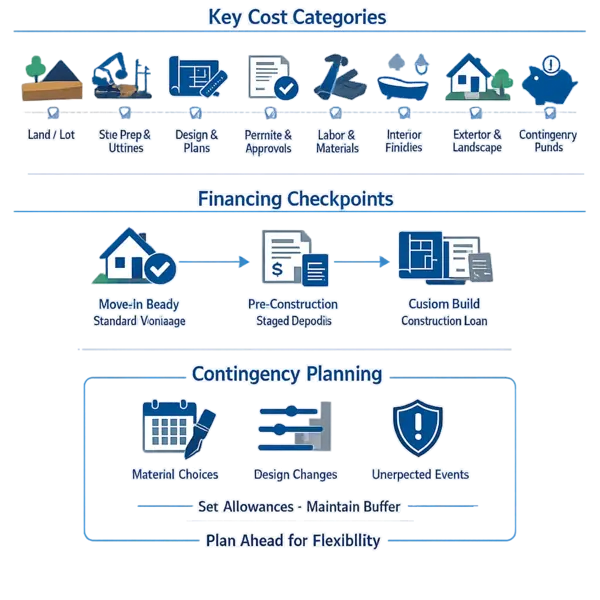
Key cost categories typically include:
- Land or lot acquisition and site conditions
- Site preparation, grading, and utility connections
- Architectural design, engineering, and planning
- Permits, inspections, and local jurisdiction requirements
- Labor, materials, and construction complexity
- Interior finishes, fixtures, and upgrade selections
- Landscaping, driveways, and exterior improvements
- Contingency reserves for unforeseen conditions
Costs vary widely depending on whether you’re building from the ground up, purchasing within new home communities California, or customizing a semi-built property.
How financing differs by purchase path
Financing for new build homes California can vary based on how you enter the process:
- Move-in ready homes: Typically financed with a standard mortgage
- Pre-construction purchases: May involve staged deposits and builder timelines
- Custom builds: Often require construction loans with draw schedules tied to project phases
Factors like interest rates, loan structure, and upgrade pricing can significantly influence overall affordability. For a deeper breakdown of planning and builder selection, review this guide on the new build home buying process.
Why contingency and upgrade planning matter
Even well-planned California new construction real estate projects benefit from built-in flexibility. Material choices, design changes, and site conditions can shift costs during construction.
Setting realistic allowances and maintaining a contingency buffer helps prevent delays and keeps your project aligned with your financial expectations.
If you’re comparing options or planning a build, explore New Construction Services for Custom Homes & Developments to better understand scope and feasibility.
California-Specific Rules, Inspections, and Energy Standards to Know
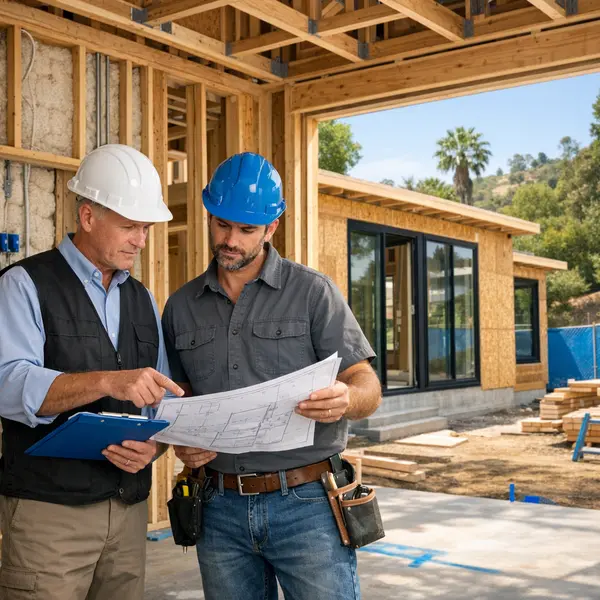
Planning new construction homes California involves more than design and budgeting. Statewide standards combine with local jurisdiction requirements, which can influence timelines, approvals, and even material selections. Whether you’re exploring California new construction real estate or building from the ground up, understanding these variables helps avoid delays and keeps your project aligned with expectations.
Why requirements vary across jurisdictions
Each city or county applies its own zoning rules, permit review processes, and utility coordination steps. That means two projects in different areas may follow different approval paths, even if they look similar on paper. Site conditions, lot size, and local ordinances all play a role, so timelines and sequencing should be treated as project-specific rather than fixed.
Inspections and warranty expectations
Even in brand-new homes, inspections remain a key part of quality control. Projects typically include multiple inspection stages—such as framing, electrical, and final sign-off—along with a walkthrough to identify any punch list items. For buyers in new home communities California, understanding the builder’s warranty process and documentation ensures issues are addressed appropriately after completion.
Energy efficiency as a planning factor
California energy standards influence everything from insulation and windows to HVAC systems and solar readiness. These requirements are designed to improve long-term efficiency and operating costs, but they can also affect upfront planning decisions. In new build homes California, energy performance is not an add-on—it’s built into the design and construction process from the start.
For a deeper look at how permits and approvals work in practice, explore guidance on planning and permitting considerations during new construction projects.
How to Evaluate New Construction Homes in California Before You Commit
Evaluating new construction homes California buyers consider requires a clear, step-by-step approach. Whether you’re exploring new construction communities or planning a custom build, these actions help you compare options, avoid surprises, and move forward with confidence.
Step 1: Define whether you are buying, building, or developing
Clarify your goal before starting a new construction home search. Identify property type, timeline, budget range, and whether you’re purchasing a move-in-ready home or managing a build. This direction shapes every decision that follows.
Step 2: Compare lot, community, and location fit
Evaluate how each property or new home communities California offers align with your lifestyle, space needs, and long-term plans. Consider zoning, neighborhood growth, and usability. For guidance, review how to find the right new construction developments near you. In some cases, an ADU build may better match your property goals than a full new build.
Step 3: Review the builder or construction team carefully
Look at relevant project experience, communication style, and how the team manages planning, permits, and construction. Strong documentation and clear scope definitions are key when comparing California new construction real estate options.
Step 4: Understand inclusions, upgrades, and change-order rules
Review what is standard versus optional. Upgrades, material selections, and change orders can affect both cost and timeline. Make sure expectations are clearly outlined before you commit to a new build home buying process.
Step 5: Confirm inspection, warranty, and professional review steps
Verify inspection milestones, walkthrough procedures, and warranty coverage. Before finalizing any agreement, it’s wise to have documents and plans reviewed by experienced professionals to ensure everything aligns with your expectations.
You can also explore New Construction Services for Custom Homes & Developments to better understand your options.
Common Mistakes to Avoid With New Construction Homes in California
Whether you’re exploring new construction homes California buyers love or planning a fully custom build, small oversights early on can lead to budget pressure, delays, or unmet expectations. The key is understanding where people commonly misstep—and what to do instead.
Budget and upgrade mistakes
Assuming upgrades are included
Many new build homes California developments advertise base pricing that excludes finishes. Fix: Review allowances carefully and price out desired upgrades before committing.
Underestimating site complexity
Lot grading, soil conditions, and utility connections can vary widely. Fix: Factor in site-specific costs early and confirm what’s included in your estimate.
No contingency planning
Unexpected adjustments are common in California new construction real estate. Fix: Set aside a realistic contingency to handle changes without stress.
Builder, contract, and communication mistakes
Rushing the contract review
Contracts for new construction houses for sale often define scope, timeline ranges, and responsibilities. Fix: Review details thoroughly and clarify anything unclear before signing.
Skipping independent review
Even in new construction communities, third-party inspections or plan reviews can add clarity. Fix: Consider an independent expert to verify quality and alignment with expectations.
Ignoring permitting and timeline variables
California approvals and inspections can vary by jurisdiction. Fix: Build flexibility into your schedule and confirm who manages each phase.
For a deeper look at planning steps and expectations, review this guide on what to know before building a new home to better prepare for your project.
Frequently Asked Questions About New Construction Homes in California
Cost and timeline questions
Is it cheaper to buy a new construction home or build one in California?
Costs vary widely. Buying in established new construction communities may offer predictable pricing, while building a custom home can be more flexible but often includes land, design, and permitting expenses. Final costs depend on location, materials, and project complexity.
How long does new construction usually take in California?
Timelines depend on project scope, site conditions, and approvals. A production home may take several months, while custom new build homes California projects can take longer. Delays can occur due to weather, material availability, or permitting requirements.
What is considered a new construction home in California?
A new construction home is typically a newly built property that has not been previously occupied. This includes move-in-ready homes, pre-construction purchases, and custom-built properties within California new construction real estate.
Inspection and quality questions
Do new construction homes still need inspections?
Yes. Even new construction homes California buyers should consider independent inspections. Third-party inspectors can identify issues that may not be obvious during builder walkthroughs and help ensure construction meets expected standards.
Are new construction homes more energy efficient than older homes?
In many cases, yes. New construction houses for sale are often built to current energy codes, which may include improved insulation, modern HVAC systems, and energy-efficient windows. Actual performance depends on design and materials used.
Builder selection and next-step questions
Can you negotiate upgrades on a new construction home?
In some cases, yes. Builders may offer flexibility on upgrades, closing costs, or design options depending on market conditions and inventory. Negotiation varies by builder and project stage.
What should I ask a builder before buying a new construction home?
Ask about timelines, included features, upgrade costs, warranty coverage, and construction standards. It’s also helpful to understand how changes are handled during the new build home buying process.
How does financing work for a new construction home in California?
Financing may involve construction loans, builder financing, or traditional mortgages depending on the purchase type. Terms and approval requirements vary, so it’s important to review options with a qualified lender.
What is the difference between pre-construction and move-in-ready inventory?
Pre-construction homes are purchased before completion, allowing for customization. Move-in-ready homes are already built or near completion, offering faster occupancy but fewer personalization options.
When should I contact a construction professional instead of only searching listings?
If your goals include customization, additions, or evaluating land for building, consulting a construction professional early can help clarify feasibility, budget expectations, and design possibilities beyond standard listings.
Ready to Discuss Your New Construction Plans?
If you’re exploring new construction homes California, the most valuable next step is a focused conversation about your goals, site conditions, and options. Whether you’re comparing lots, reviewing builders, or weighing timelines, early planning helps you avoid costly pivots later and keeps your project aligned from the start.
When a consultation makes sense
Reach out when you’re:
- Comparing parcels or evaluating build feasibility
- Shortlisting contractors for new build homes California
- Aligning scope, budget range, and sequencing
- Clarifying the new build home buying process for your situation
Best next step for a clearer project path
Start by reviewing our service overview to understand how projects are planned and delivered: New Construction Services for Custom Homes & Developments. If a full build isn’t the right fit, you can also explore Accessory Dwelling Units (ADU) Design & Construction or Garage Conversions by Alvapareen Construction as alternative ways to add space.
Final Thoughts on Choosing the Right New Construction Path in California
Navigating new construction homes California requires a clear understanding of your goals, budget, timeline, and the level of customization you expect. Whether you’re exploring new construction communities, purchasing a move-in-ready home, or planning a fully custom build, each path comes with different responsibilities, costs, and decision points.
The most effective approach is to evaluate your property type, financing readiness, and long-term plans before committing. Comparing options across the new build home buying process helps you avoid surprises and align your investment with your lifestyle or portfolio strategy.
The key takeaway
Success with California new homes comes down to choosing the right path early, planning thoroughly, and working with experienced professionals who understand local requirements and construction complexity.
If you’re considering building or investing in new construction, take the next step by exploring New Construction Services for Custom Homes & Developments to better understand what’s possible for your project.