
New Construction in Los Angeles: What Property Owners Should Know Before Building
Why New Construction in Los Angeles Requires Better Planning
New Construction in Los Angeles covers a wide range of projects—from custom homes and modern townhomes to small multi-unit builds and investment-focused developments. While the opportunity is strong, building in this market involves layered decisions around zoning, design, permits, timelines, and builder selection. Many property owners start with similar questions: How long will it take? What approvals are required? How do you compare builders or decide between new construction and resale?
This guide is designed to bring clarity to those questions with a structured, practical approach. Whether you’re planning a primary residence or evaluating a development opportunity, understanding the process early helps reduce risk and align expectations. At Alvapareen Construction, projects are approached with a focus on quality and long-term value—Built for Transformation.
Who this guide is for
Homeowners, property owners, real estate investors, and commercial property owners in Los Angeles who are exploring ground-up construction. If you’re comparing new construction homes in Los Angeles or evaluating custom home builders, this guide is built to support informed decision-making.
What readers will learn
A clear overview of the Los Angeles new home process, including planning stages, permitting considerations, key cost drivers, and how to compare building options. Each section is designed to help you move step-by-step—from early research to confident next steps.
What New Construction in Los Angeles Usually Includes
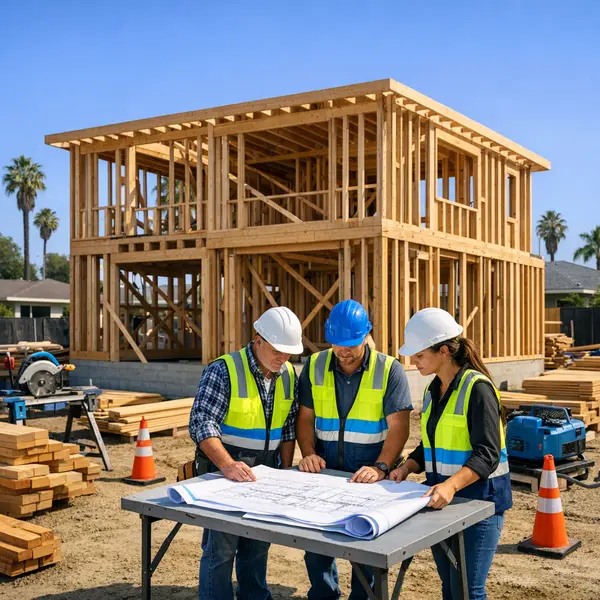
New Construction in Los Angeles refers to building a structure from the ground up on a vacant lot or a site that has been cleared for a completely new build. Unlike remodeling or additions, it starts with a blank slate—covering planning, design, permitting, and full construction from foundation to finish.
Working with experienced Los Angeles home builders ensures the project aligns with zoning requirements, lot conditions, and the intended use of the property, whether residential or multi-unit development.
Definition of ground-up construction
Ground-up construction means creating a brand-new structure where none previously existed—or replacing an existing building entirely. This includes site preparation, foundation work, structural framing, and all systems installation, resulting in a fully new property rather than a modified one.
Common project types
- Custom homes tailored to individual property owners
- Townhomes and small residential developments
- Apartment buildings and multi-unit housing
- Spec homes built for resale in competitive Los Angeles markets
How it differs from remodels and additions
New construction is often confused with other construction services, but the scope is very different:
- Remodeling: Updates existing spaces like kitchens or bathrooms without rebuilding the entire structure
- Additions: Expands a current home but keeps the original structure intact
- ADUs and garage conversions: Repurpose or add smaller units rather than build a full property from scratch
Each project path depends on zoning, site conditions, and long-term goals. For a deeper look at planning considerations, explore this guide to building a new home in Los Angeles.
Why Property Owners Choose New Construction
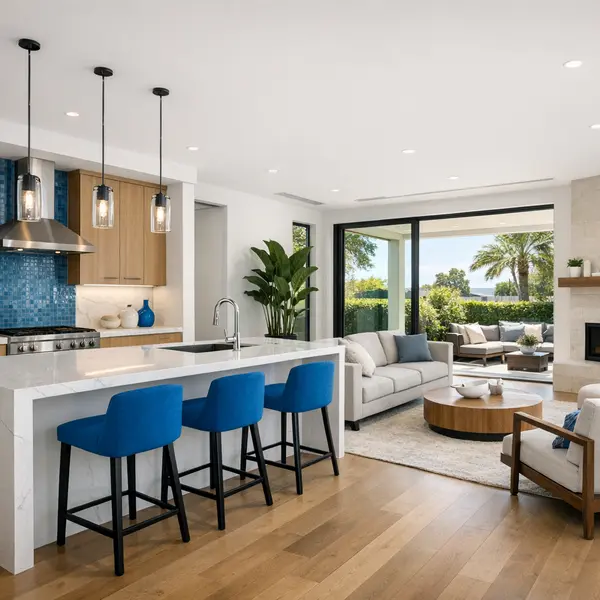
Choosing New Construction in Los Angeles is often about control, flexibility, and aligning a property with long-term goals. Whether you’re building a primary residence, developing income property, or planning a multi-unit project, new construction gives you the ability to shape how a space functions from the ground up—something resale properties rarely offer.
Compared to renovating older homes or purchasing existing inventory, working with experienced custom home builders Los Angeles allows property owners to design around today’s needs, future growth, and evolving market expectations.
Benefits for homeowners
For owner-occupants, new construction homes in Los Angeles offer a high level of personalization and day-to-day usability.
- Layout control: Design floor plans around how you actually live, from open living areas to dedicated workspaces.
- Finish selection: Choose materials, fixtures, and design elements that match your style instead of inheriting outdated choices.
- Long-term functionality: Plan for growing households, accessibility needs, or multi-generational living from the start.
Benefits for investors and income properties
Investors and developers often compare new construction vs resale in Los Angeles when evaluating long-term property strategies.
- Site optimization: Maximize lot potential through thoughtful design, parking layouts, and unit configuration.
- Rental alignment: Build units that match current tenant expectations in layout, amenities, and durability.
- Planning efficiency: Start with a clear vision rather than adapting an older structure with limitations.
For larger-scale projects, options like Multi-Unit Construction Project in Los Angeles may align with income-focused development goals.
Benefits of modern systems and design
Building new allows property owners to incorporate current construction standards and design preferences seen in modern homes Los Angeles buyers and tenants expect.
- Updated systems: New electrical, plumbing, and HVAC systems designed to meet current code requirements.
- Energy-conscious design: Opportunities to include efficient materials and layouts, depending on project scope and specifications.
- Contemporary appeal: Clean lines, natural light, and functional flow that align with today’s market preferences.
If you’re evaluating whether this path fits your goals, explore New Construction in Los Angeles to better understand planning, scope, and next steps.
The New Construction Process From Planning to Completion
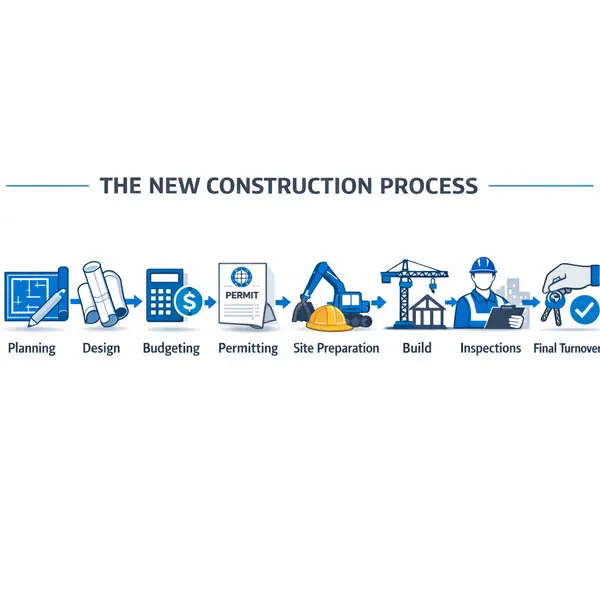
Understanding the workflow of New Construction in Los Angeles helps property owners plan realistically and avoid costly surprises. While every project differs based on scope, site conditions, and approvals, most follow a structured sequence from early planning through final turnover. Early coordination with designers, engineers, and permitting teams is key, especially in Los Angeles where regulations and inspections play a central role.
Phase 1: Feasibility and planning
This stage defines your goals, property constraints, and intended use while establishing a preliminary budget and confirming zoning or site limitations before design begins.
Phase 2: Design, engineering, and permitting
Architectural plans are developed alongside structural and engineering input, followed by code review and submission for Los Angeles building permits, where approval timelines vary depending on project complexity and jurisdiction.
Phase 3: Construction, inspections, and turnover
Once approved, the project moves into construction with a typical sequence:
- Site preparation and foundation work begin the build.
- Framing establishes the structure and layout.
- Mechanical, electrical, and plumbing systems are installed.
- Interior and exterior finishes bring the design to life.
- City inspections occur at key milestones to ensure compliance.
- Final walkthroughs and punch list items are completed before handoff.
Changes during construction can impact both timing and budget, so maintaining clear communication with your builder is essential throughout the process.
For a deeper breakdown of how each phase works locally, see New Construction in Los Angeles: Process, Costs, Permits, and What to Expect or explore how the full Los Angeles new construction process is managed from concept to completion.
How to Compare New Construction Options and Builder Fit
Choosing the right path for New Construction in Los Angeles starts with understanding how different project types and builders align with your goals. Whether you’re evaluating custom homes, small multi-unit builds, or development-style opportunities, a structured comparison helps you avoid costly mismatches in scope, timeline, and expectations.
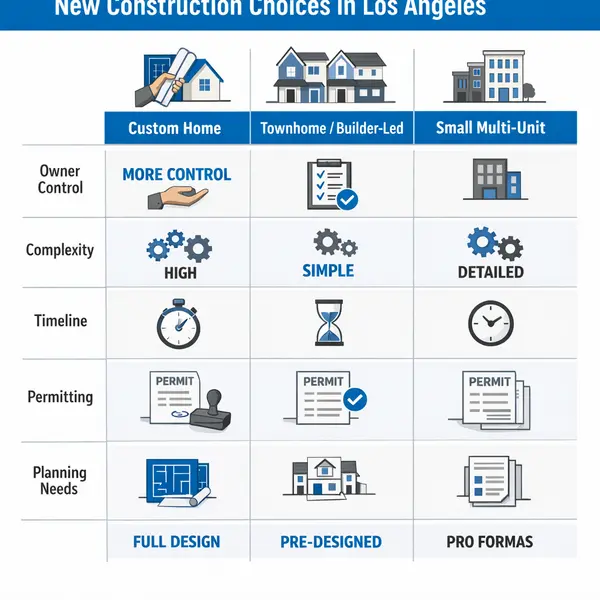
Compare project paths
The right approach depends on what you own, what you want to build, and how involved you plan to be:
- Custom build: Best if you own land and want full design control. Higher involvement and planning complexity.
- Builder-led development: More streamlined with predefined plans, but less flexibility.
- Small multi-unit projects: Suitable for investors balancing density and long-term value; see multi-unit construction options.
- Smaller-scale alternatives: Projects like ADUs in Los Angeles may offer faster paths with lower complexity.
Compare builder criteria
- Experience with similar Los Angeles new construction projects
- Clarity in scope, plans, and construction phases
- Familiarity with Los Angeles building permits and local processes
- Defined communication structure and update cadence
- Realistic scheduling approach based on project type
Red flags to notice early
- Vague or incomplete project scope descriptions
- Unclear allowances or missing cost breakdowns
- Overly aggressive or guaranteed timelines
- Lack of clarity around permitting or approvals
For a deeper breakdown of builder fit and project planning, review New Construction in Los Angeles | Alvapareen Construction as part of your Los Angeles new home builder comparison process.
Key Cost Factors and Budget Planning Considerations
Understanding New Construction in Los Angeles costs starts with recognizing that no two projects are the same. Instead of relying on broad estimates or generalized “Los Angeles new home prices,” it’s more accurate to evaluate cost based on your specific lot, design, and construction scope.
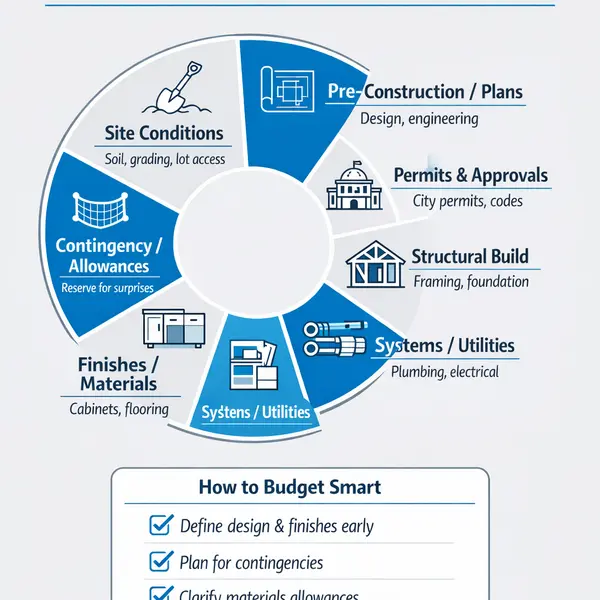
What usually drives cost
- Site conditions: Grading, soil quality, slope, and access can significantly impact preparation work.
- Pre-construction & plans: Architectural design, engineering, and planning requirements.
- Permits & approvals: Local Los Angeles building permits, inspections, and compliance items.
- Structural build: Foundation, framing, roofing, and core construction systems.
- Systems & utilities: Electrical, plumbing, HVAC, and utility connections.
- Finishes & materials: Cabinetry, flooring, fixtures, and overall finish level.
Why generic averages can mislead
Online averages for new construction homes Los Angeles often overlook key variables like neighborhood requirements, lot constraints, and custom design choices. A flat lot with a standard layout differs greatly from a hillside build or a high-end custom home. These differences can shift scope and cost in meaningful ways, making generalized numbers unreliable for planning.
How to budget more realistically
A more reliable approach is to build your budget around clearly defined scope and allowances. Early collaboration with experienced Los Angeles home builders helps align expectations before construction begins.
- Define design intent and finish level early
- Include a contingency for unforeseen conditions
- Clarify allowances for materials and fixtures
- Plan for potential changes during construction
For a deeper look at planning considerations, you can review this Los Angeles new construction planning guide. For the most accurate budget, a project-specific evaluation is essential. You can also explore project scope details through new construction services in Los Angeles.

Los Angeles Permits, Zoning, and Local Factors to Expect
Planning New Construction in Los Angeles involves more than design and budgeting. Local permitting, zoning regulations, and site-specific conditions can influence how a project develops from concept to construction. Understanding these factors early helps set realistic expectations and reduces avoidable delays.
Why local approvals matter
In Los Angeles, projects typically go through plan review, department checks, and multiple inspections. This process may involve building, zoning, and utility departments depending on the scope. Coordination between these entities can affect timelines, revisions, and even design adjustments. Requirements can vary by jurisdiction and project type, so approvals are not always linear or predictable.
Property-specific constraints
Every property comes with its own variables. Lot size, shape, access, and grading can all influence what’s feasible. In some Los Angeles neighborhoods, hillside conditions, parking requirements, or proximity to neighboring structures may also affect design decisions. Utility connections and site access for construction equipment are additional considerations that can shape the project scope.
The value of early due diligence
Before finalizing plans or budgets, it’s important to review zoning, site conditions, and permit pathways. Early due diligence helps identify potential constraints and align expectations with what’s realistically achievable. Working with experienced Los Angeles home builders or professionals familiar with local processes can make a meaningful difference in navigating these early stages with clarity.
How to Plan a New Construction Project Before You Commit
Planning New Construction in Los Angeles starts well before design drawings or contractor bids. A clear, step-by-step approach helps you align your vision, budget, and site realities so you can move forward with confidence.
Step 1: Define your project goals
Clarify how the property will be used, your target square footage, occupancy needs, and long-term plans. Whether you’re building a primary residence, investment property, or exploring alternatives like an ADU project, your goals will guide every decision that follows.
Step 2: Review the property and feasibility
Evaluate your lot conditions, access, and basic zoning considerations. In Los Angeles, feasibility depends on factors like setbacks, utilities, and local regulations. A professional review helps confirm whether your vision aligns with what the site can realistically support.
Step 3: Build a realistic budget framework
Outline your expected investment range, including design, permits, construction, and contingency. Costs for new construction homes in Los Angeles can vary significantly based on scope, materials, and site complexity, so plan for flexibility rather than fixed assumptions.
Step 4: Compare builders and process fit
Not all Los Angeles home builders approach projects the same way. Look for:
- Clear communication and planning structure
- Experience with similar project types
- Transparency around permits and timelines
- A defined construction process from start to finish
You can also review nearby project examples to better understand how to compare new construction developments in your area.
Step 5: Schedule a project review
Before committing, meet with a qualified contractor to review feasibility, scope alignment, and next steps. This stage helps identify potential challenges early and ensures your expectations match the realities of the Los Angeles new home process.
Discuss Your Construction Plans
You can also explore service details on New Construction in Los Angeles with Alvapareen Construction to prepare for your consultation.
Frequently Asked Questions About New Construction in Los Angeles
Planning and scope questions
What counts as new construction in Los Angeles?
New construction in Los Angeles typically refers to building a structure from the ground up on a vacant lot or after a complete teardown. It can include custom homes, multi-unit properties, or ground-up commercial buildings. Projects like ADUs or major additions may fall under different categories depending on scope and local definitions.
Can new construction work for a multi-unit or investment property?
Yes, many Los Angeles property owners pursue new construction for duplexes, small apartment buildings, or mixed-use developments. Feasibility depends on zoning, lot size, and local regulations. A professional review helps determine what’s realistically allowed before design begins.
Cost and timeline questions
How long does a new construction project usually take in Los Angeles?
Timelines vary widely depending on project size, design complexity, and permitting requirements. Planning and approvals can take several months, followed by construction phases that also vary by scope. Delays may occur due to inspections, material availability, or site conditions.
What affects the cost of new construction in Los Angeles?
Costs are influenced by factors like lot conditions, architectural design, material selections, labor, and local building requirements. Utility connections, grading, and structural engineering can also impact the budget. Each project is unique, so costs should be evaluated case by case.
Do I need permits for a new construction project in Los Angeles?
Yes, permits are required for nearly all new construction homes in Los Angeles. This includes plan checks, zoning verification, and inspections throughout the build. Approval timelines and requirements depend on the project type and local regulations, so early planning is important.
Builder selection and next steps
How do I compare Los Angeles home builders for a new construction project?
Compare builders based on experience with similar projects, licensing, project portfolio, and communication style. Reviewing past work and understanding their process can help you assess fit. Clear estimates and transparency during planning are also important when evaluating options.
Is new construction better than buying a resale home in Los Angeles?
New construction offers customization and modern systems, while resale homes may provide faster move-in and established neighborhoods. The right choice depends on your timeline, budget, and long-term goals. Many buyers weigh flexibility against convenience when deciding.
What should I prepare before requesting a new construction consultation?
Prepare basic details like your property address, budget range, project goals, and timeline expectations. If available, bring surveys, site photos, or inspiration examples. Having this information helps builders provide more accurate guidance during early discussions.
Discuss Your Construction Plans With a Local Team
If you’re preparing for New Construction in Los Angeles, a focused conversation can help you move forward with clarity. Review your options, understand site considerations, and align your vision with practical next steps. You can also explore service details on our new construction services page before reaching out.
At Alvapareen Construction, we work with homeowners and property owners across Los Angeles to evaluate feasibility, scope, and planning priorities—so your project starts on solid ground.
What to discuss in a consultation
- Property details, zoning considerations, and site conditions
- Your goals, layout ideas, and intended use
- Timeline expectations and planning priorities
- Any early plans, sketches, or questions you want reviewed
Final Thoughts on Planning New Construction in Los Angeles
Key takeaway recap
Successful New Construction in Los Angeles starts with clear planning—understanding feasibility, setting a realistic budget, navigating permits, and choosing the right builder for your goals. Each project is shaped by site conditions, local requirements, and design priorities, so early evaluation is essential.
When you’re ready to move from research to a project-specific plan, explore your options with a detailed overview of new construction services in Los Angeles to better understand the next steps.